Careful observation
Notice direction, speed, repetition and connections instead of only saying “it moves.”
 ESMEarly Simple Machines
Ages 4–6 · SQ Exclusive · LEGO engineering foundations
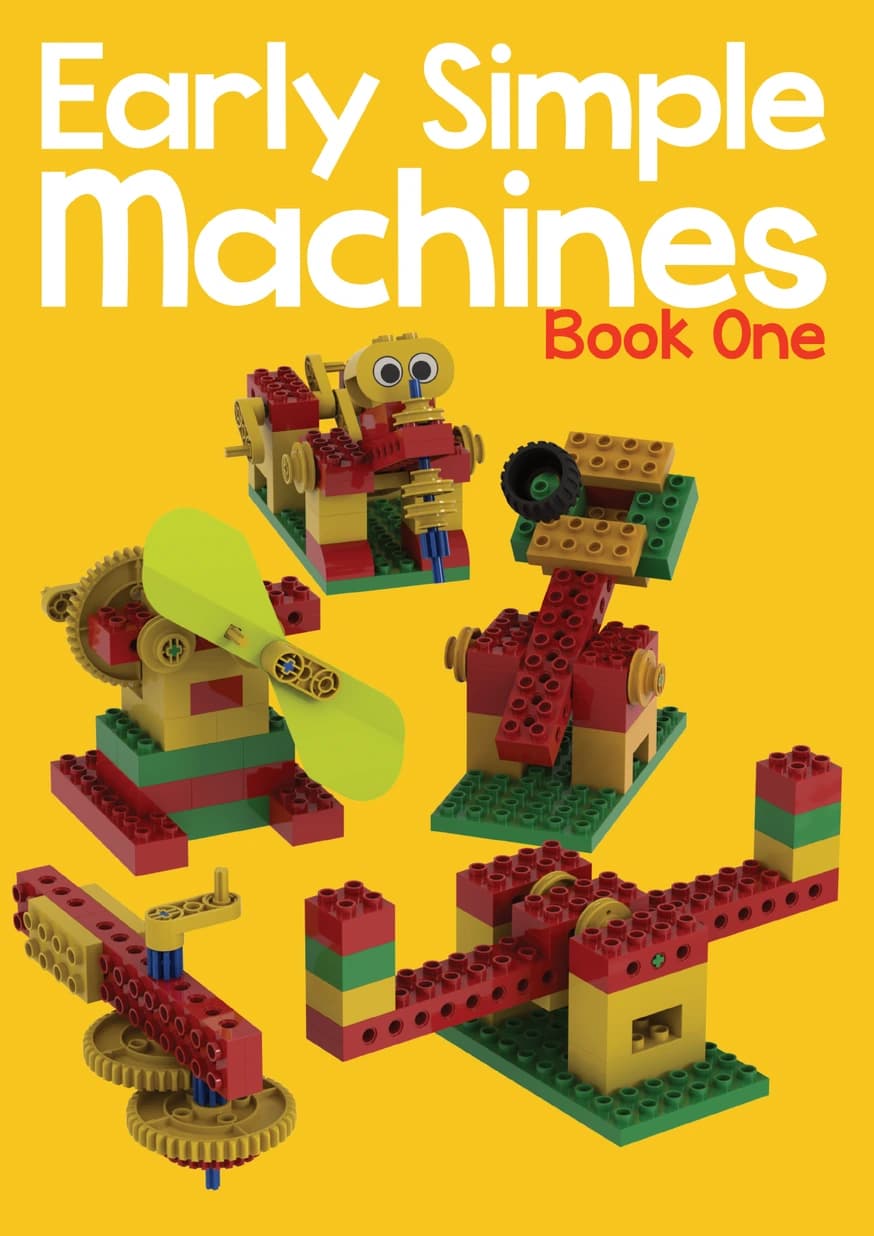
Four books. Twenty moving machines. One year of engineering discoveries. SQ Exclusive ESM brings Books 1–4 together in 40 lessons, with two lessons for every unit: build and explore, then invent and explain.
SQ Exclusive · ESM 1, 2, 3 & 4 · 1 year · 2 lessons per unit.
Inside the books + try a build in 3D ↓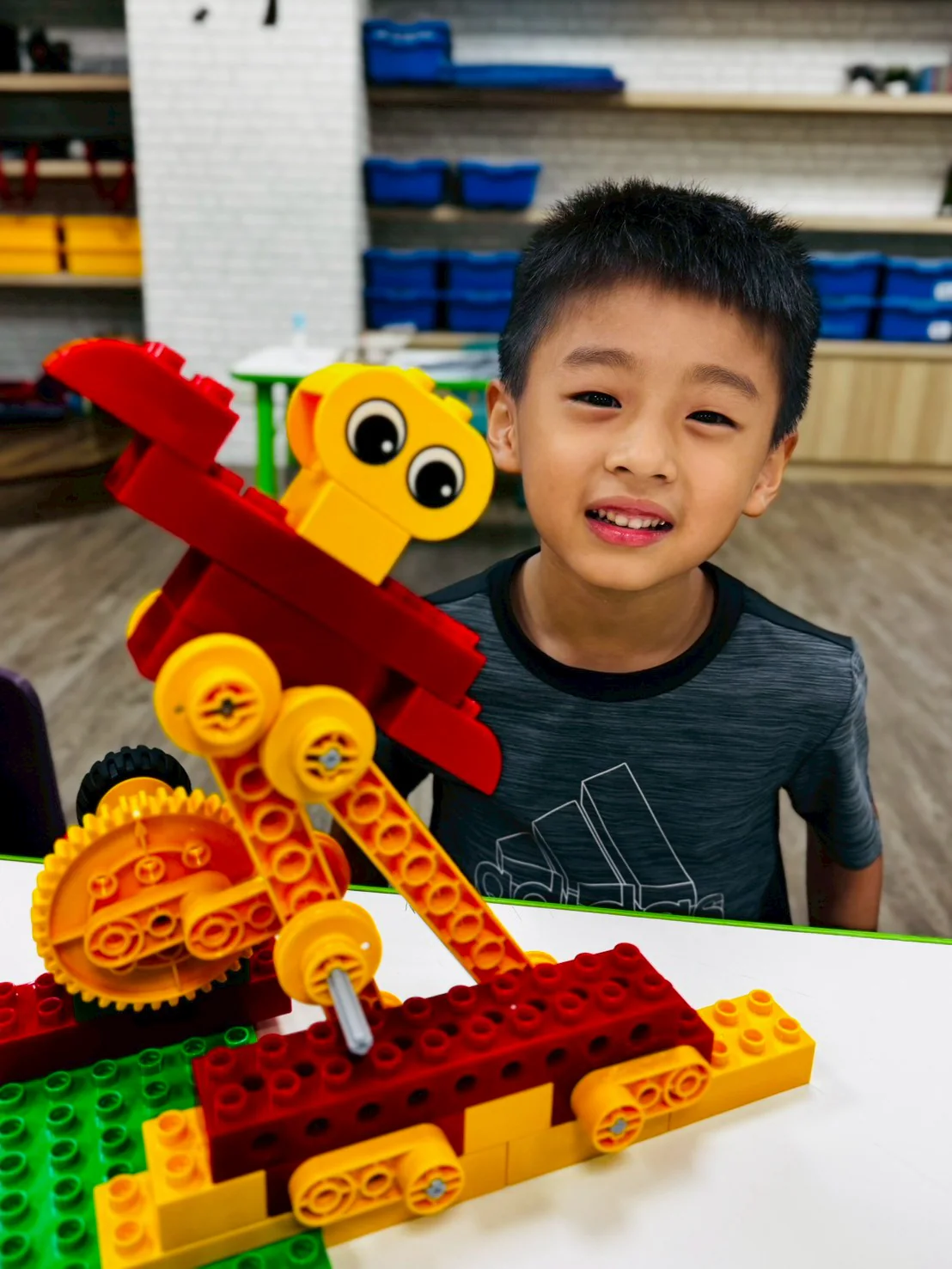
Currently scheduled
Friday 19:00–20:00
Starts 16 October 2026.
10 students maximum
This is the time for the group scheduled now. We may open new groups, so if this time does not suit your family, please still get in touch.
Ask about this course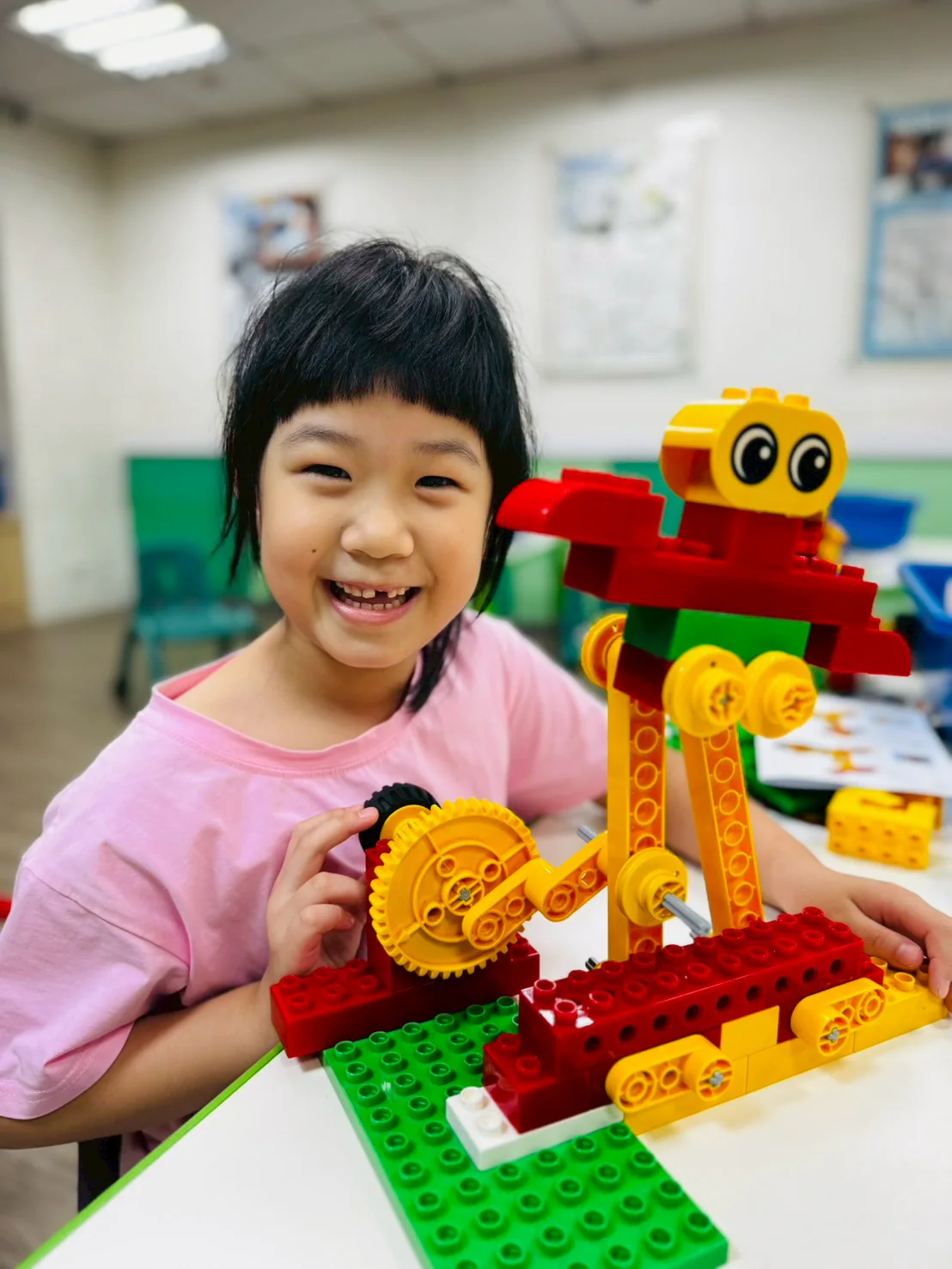
The bridge into engineering
At four to six, children are ready for more than a finished model. They can predict what a turn might do, watch a mechanism closely, follow a visual sequence with a partner and make a change they can call their own.
Start with a real-world movement and learn the words to notice it clearly.
Follow a visual sequence and experience how connected parts work together.
Use the mechanism as inspiration for a new idea—not a model that must be copied.
One unit · Two connected lessons
Each unit follows the SQ Exclusive two-lesson rhythm. Children first get to know a mechanism through a guided build, then use what they have learned to invent, test and review their own idea.
Meet the idea, learn useful words and build the model. Test its movement and notice how the connected parts work together.
Use the mechanism in a new design. Try it, make a change and explain what happened, then revisit the ideas and vocabulary.
4 books × 5 units × 2 lessons = 40 lessons across one year.
Our classroom toolkit
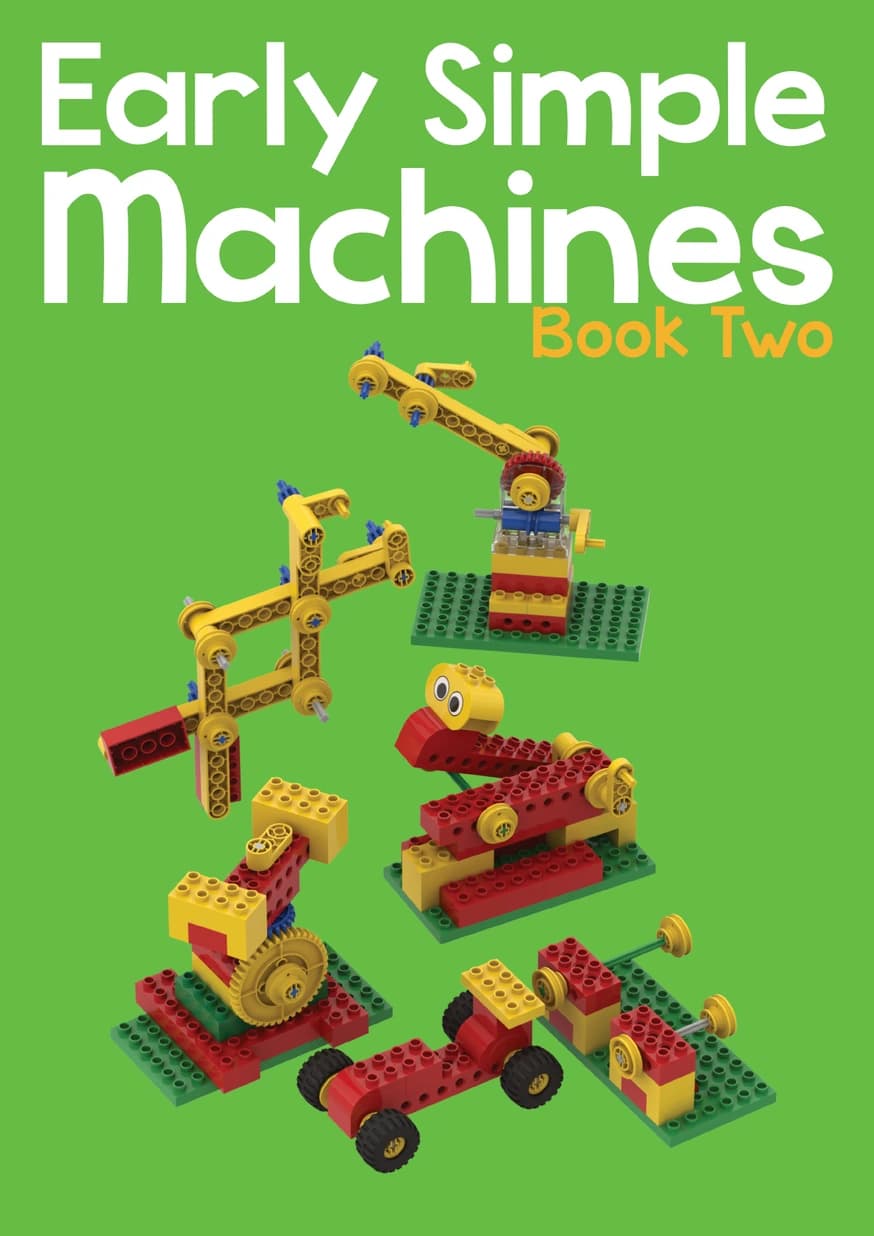
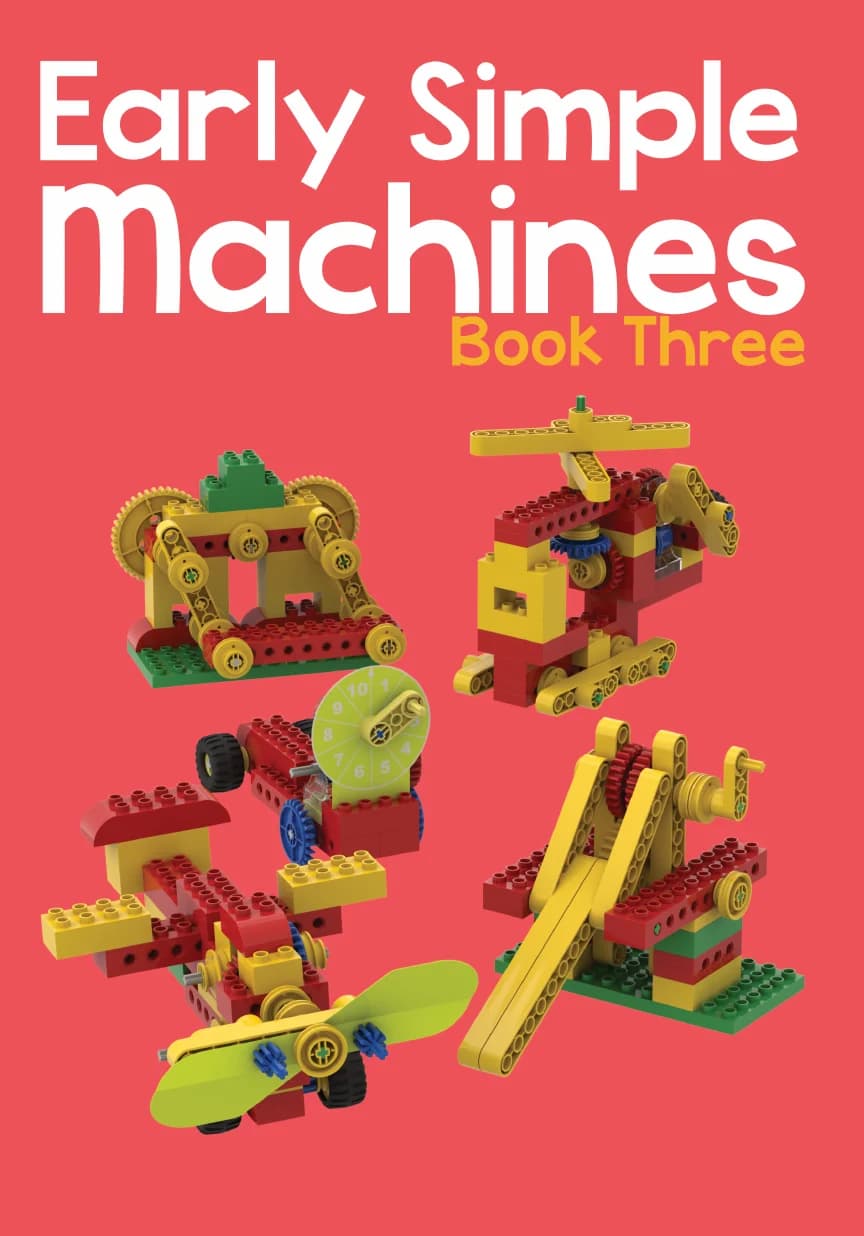
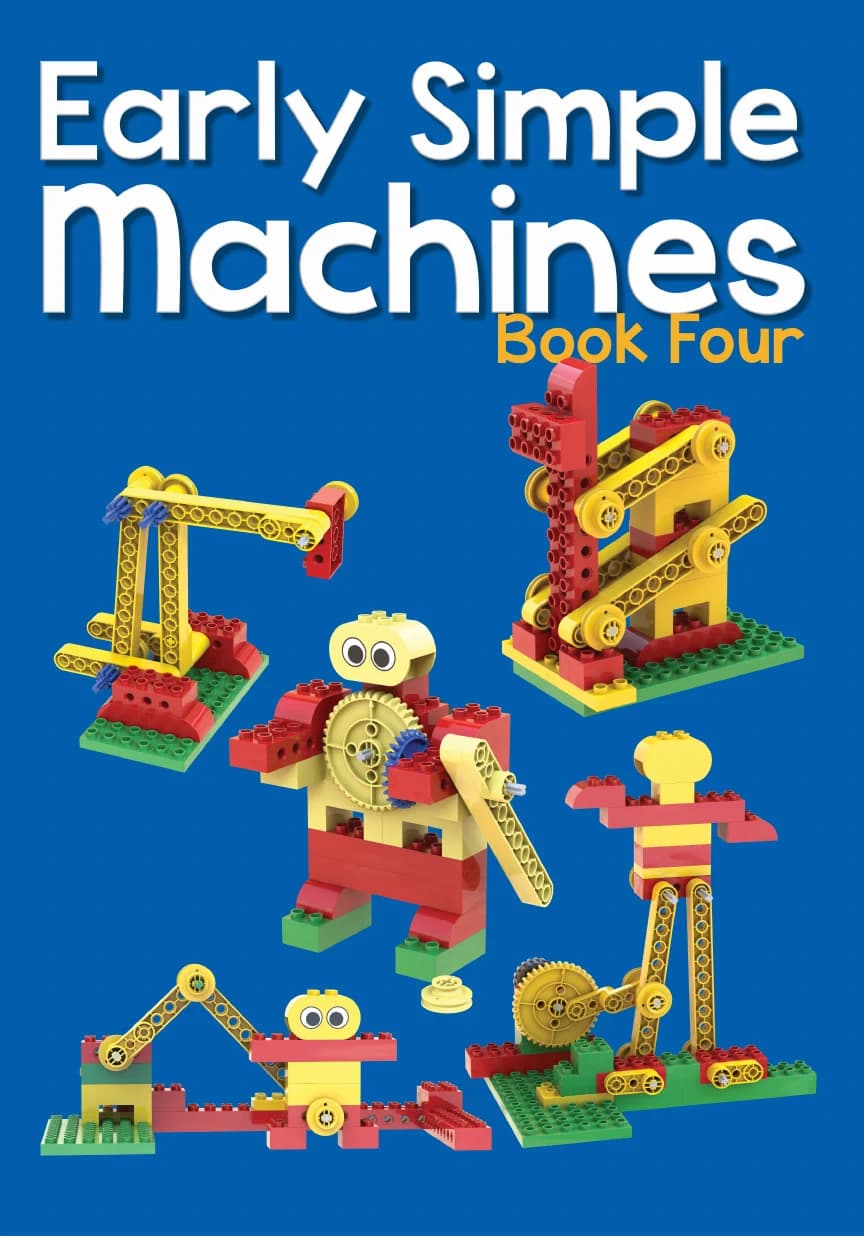
All four ESM books are part of the one-year SQ Exclusive course. Each book gives five machines a story and a question. BrickStep lets children turn a model around, look closely and tackle the next step with confidence.
From model to investigation
The finished car has a job to do. Children watch the pointer turn, measure familiar objects and put their findings in the book. A working mechanism becomes a reason to count, compare and explain.
Turn the real ESM model around to inspect its dial, wheels and gears. Follow the connections, then ask: how could a wheel help us measure a distance?
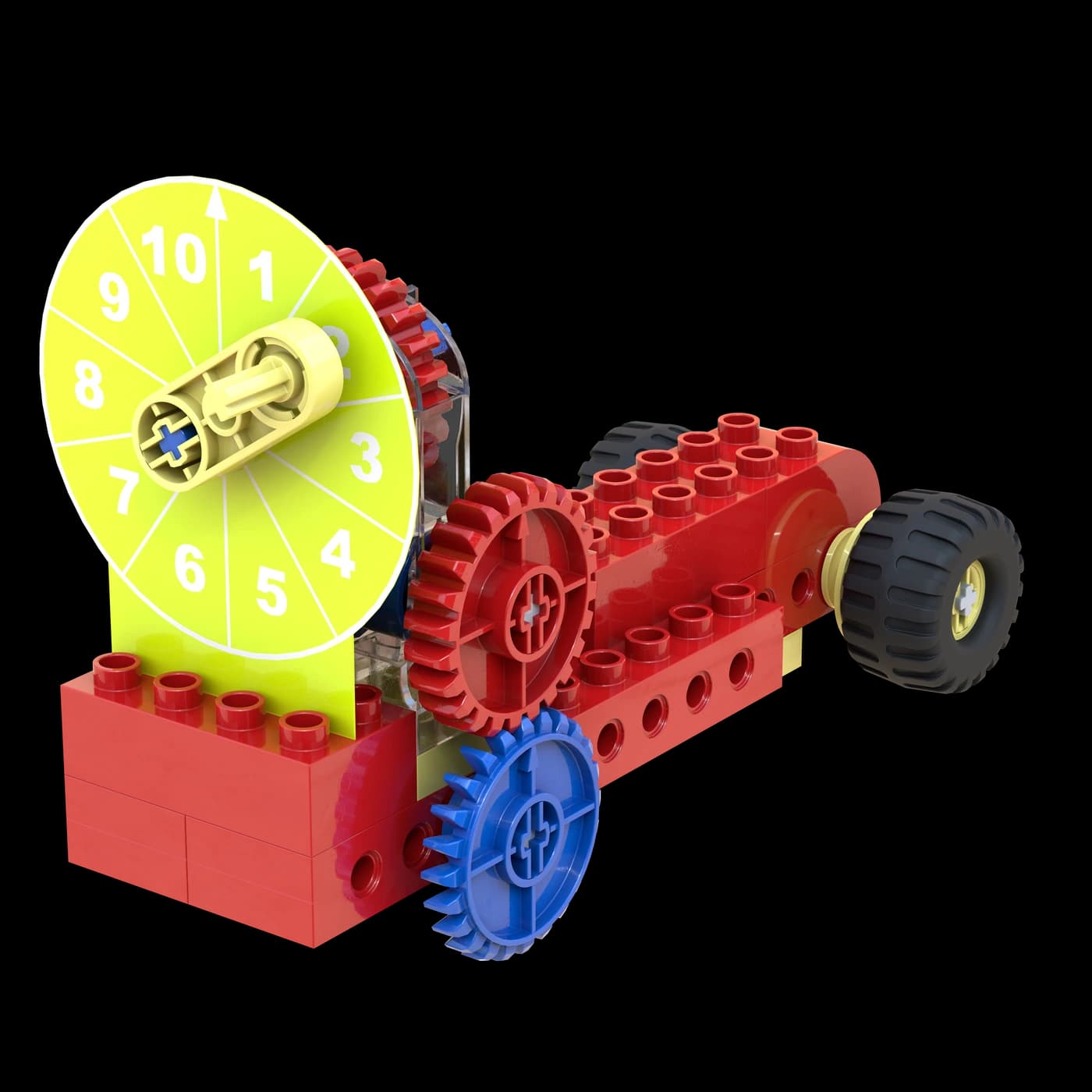
Drag to turn it. Use the arrows to look from another angle.
Open the building instructions ↗The complete ESM machine line
From the first seesaw to the final dancer, all twenty units belong to the same one-year course. Each book contains five units, and each unit has two connected lessons.
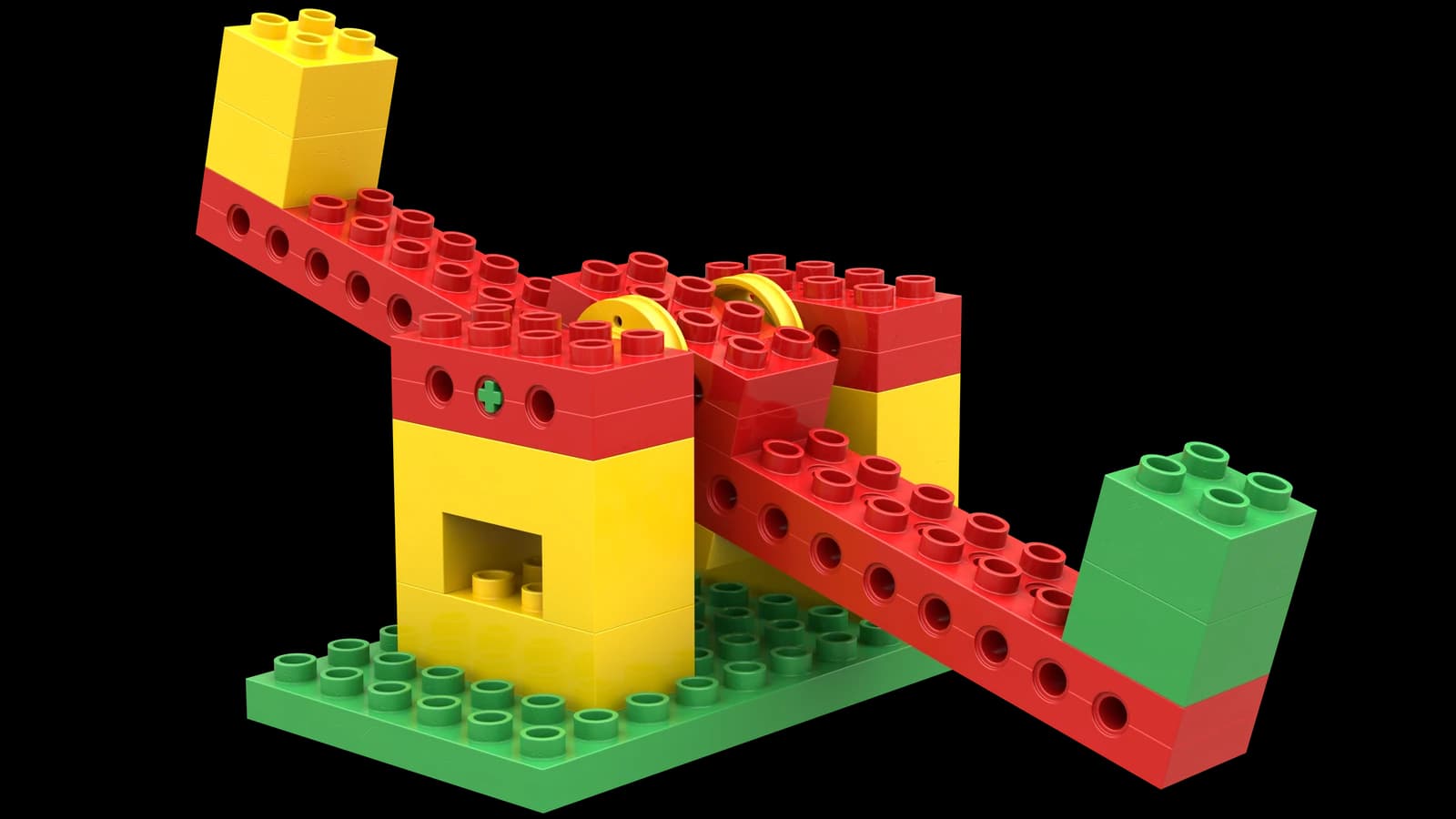
Explore balance and how two sides move up and down.
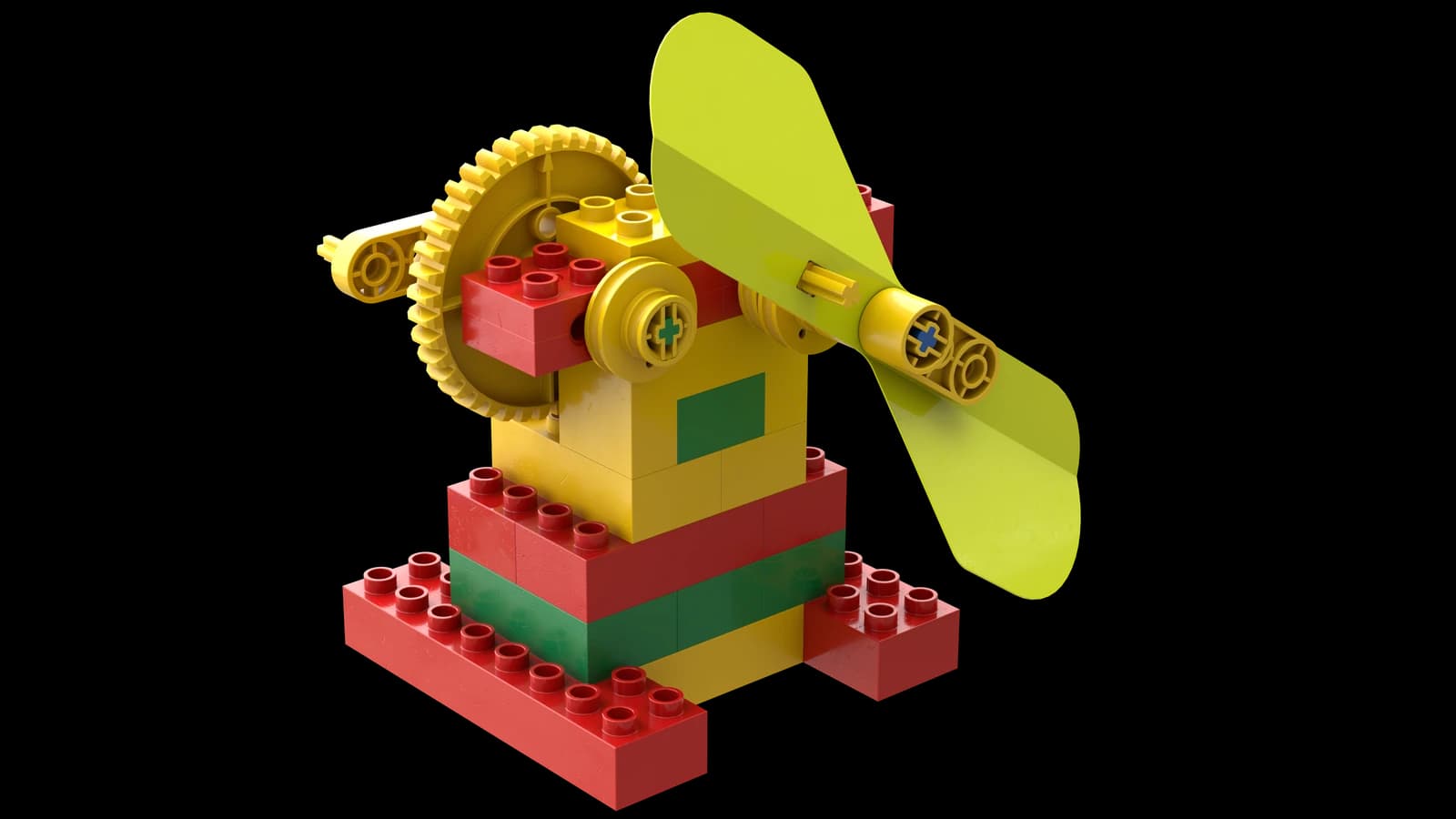
Connect gears to turn blades and compare fast and slow movement.
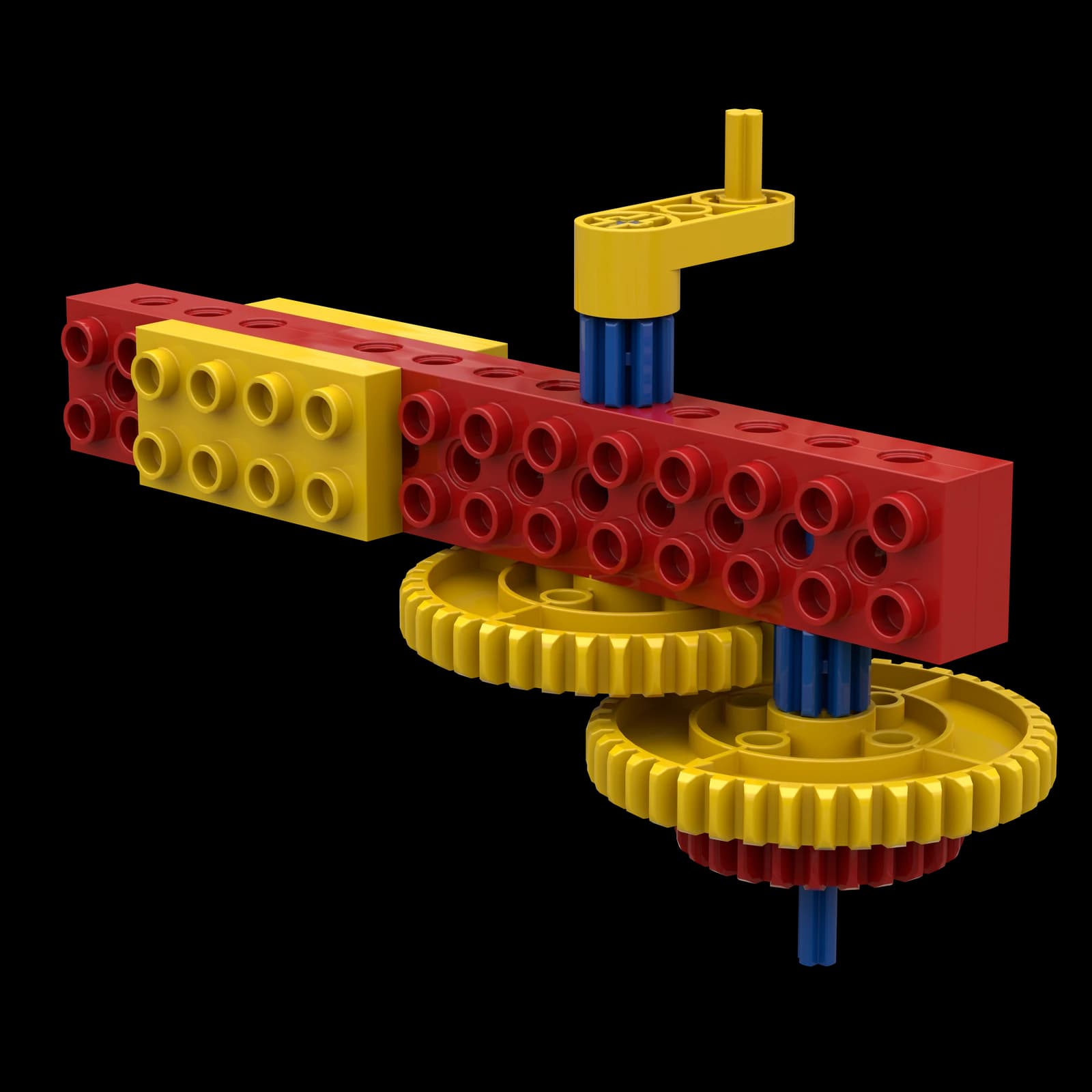
Turn a handle, set a top spinning and investigate balance.
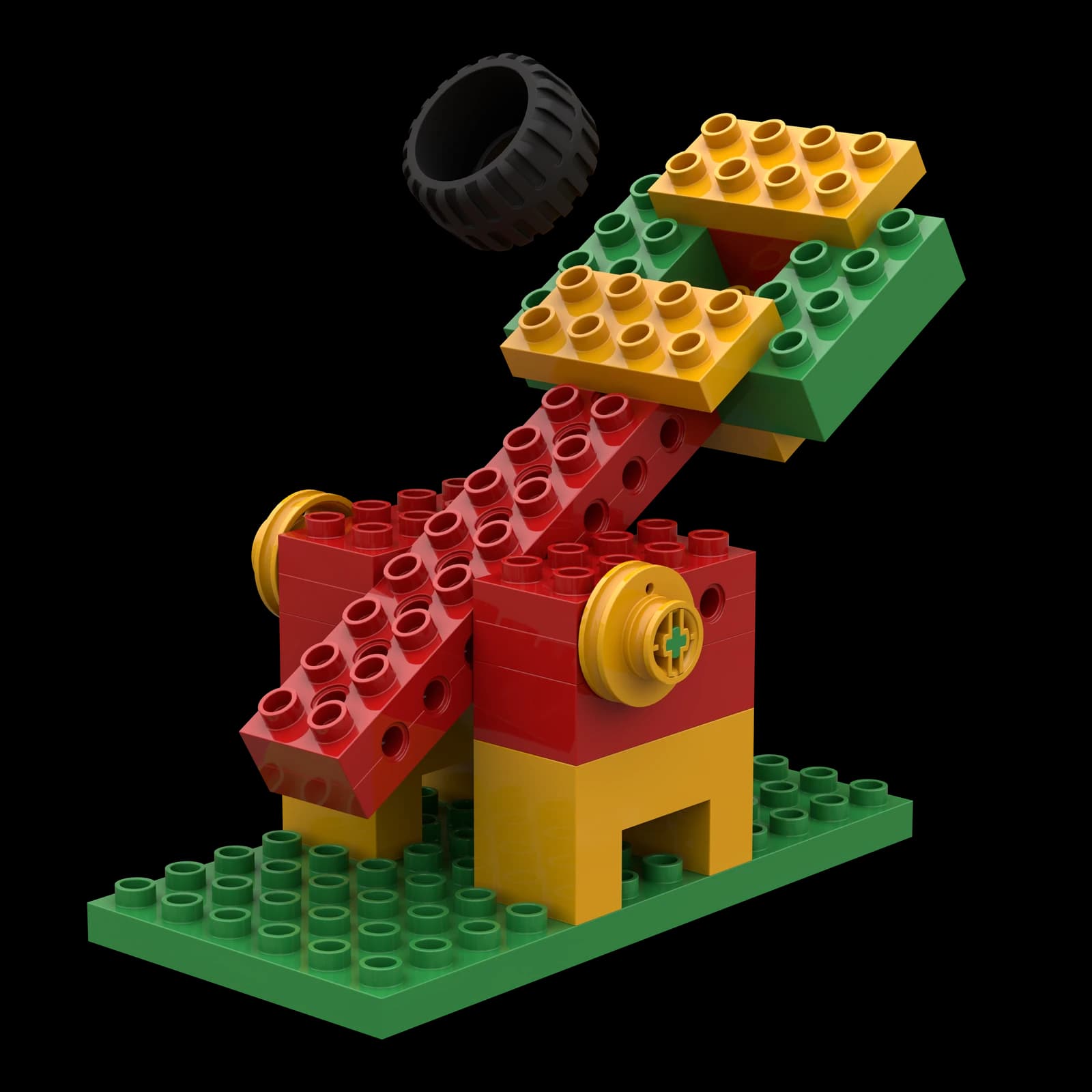
Use a lever and pivot to launch a soft load towards a target.
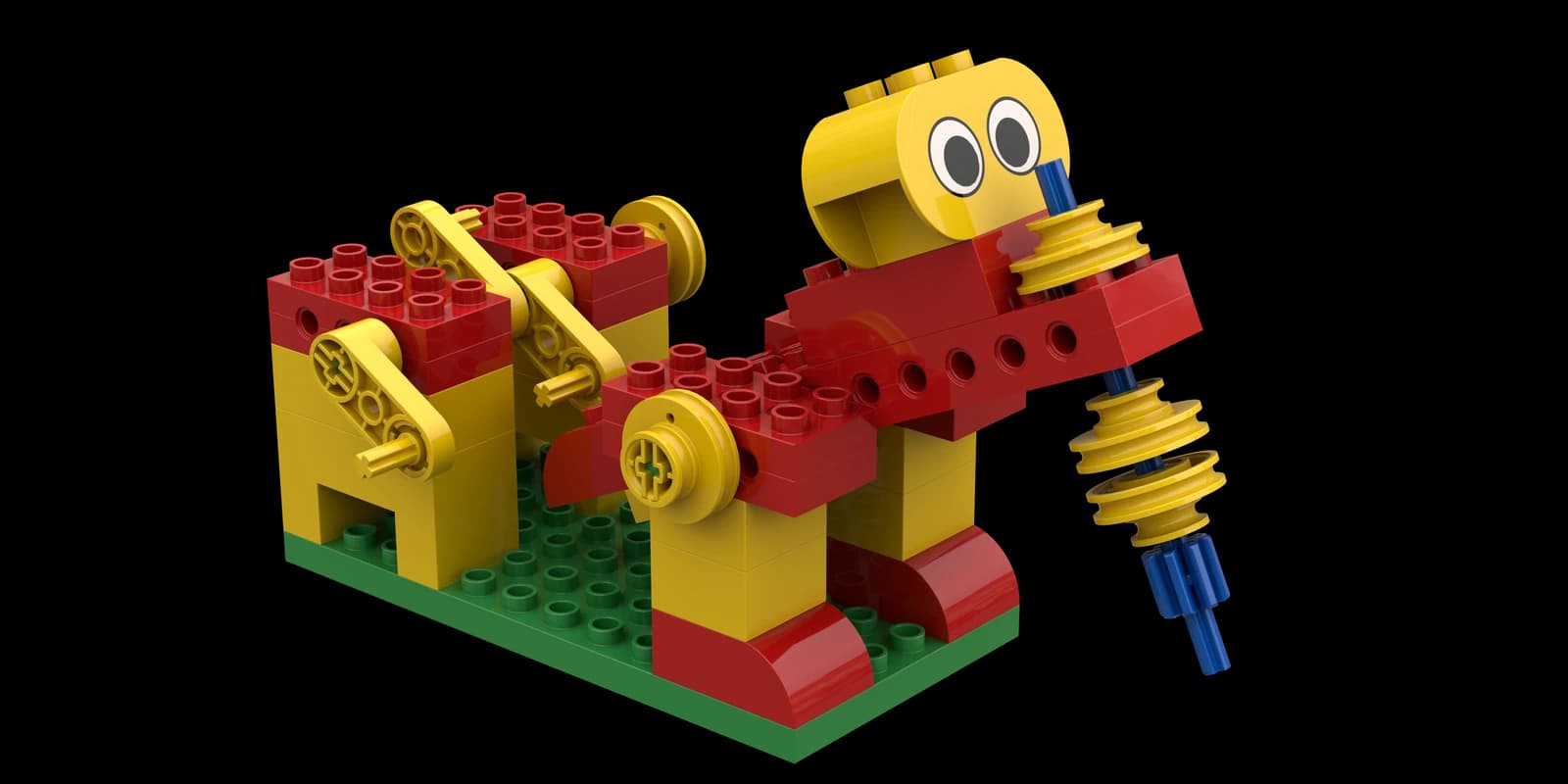
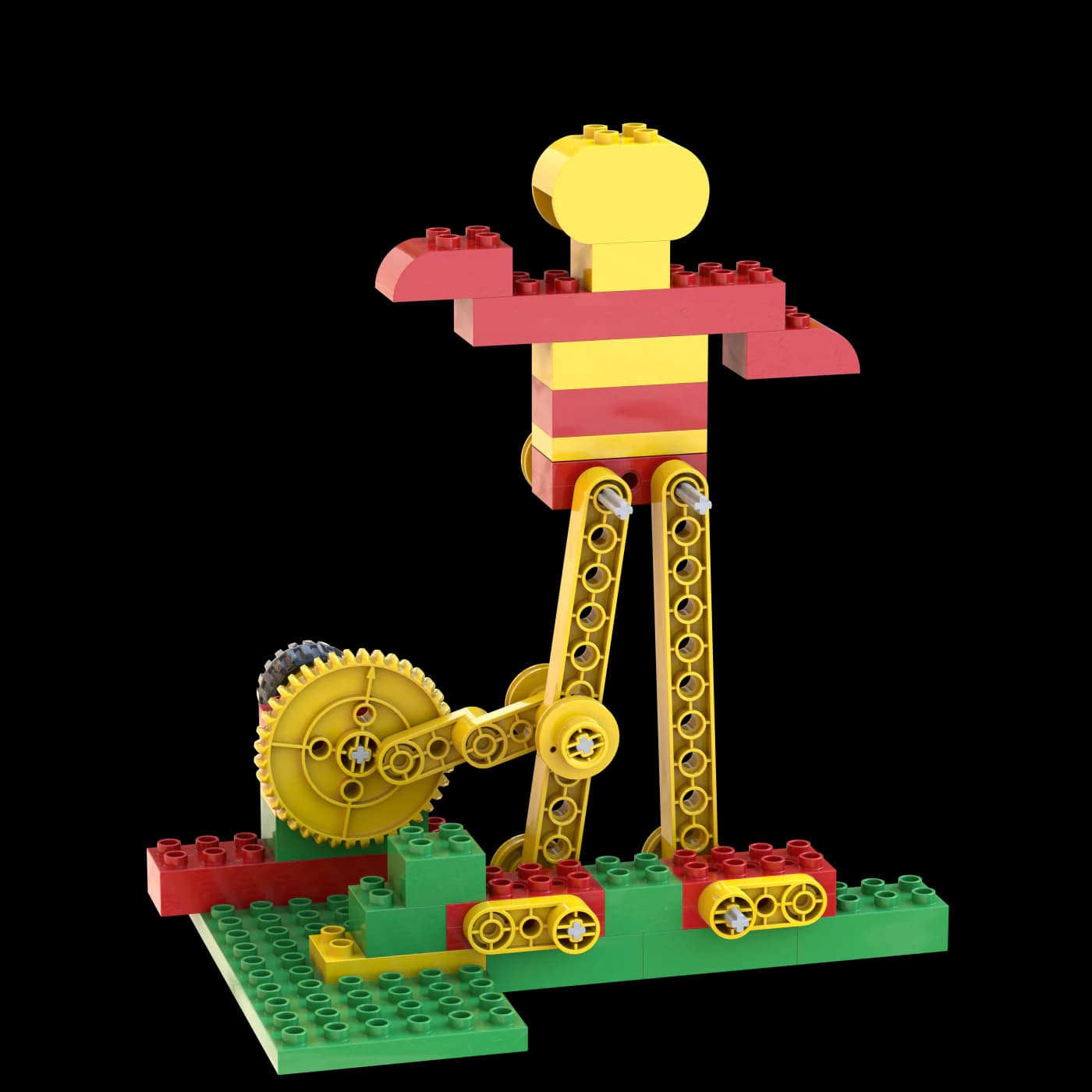
Discover how a turning cam makes a bird move up and down.
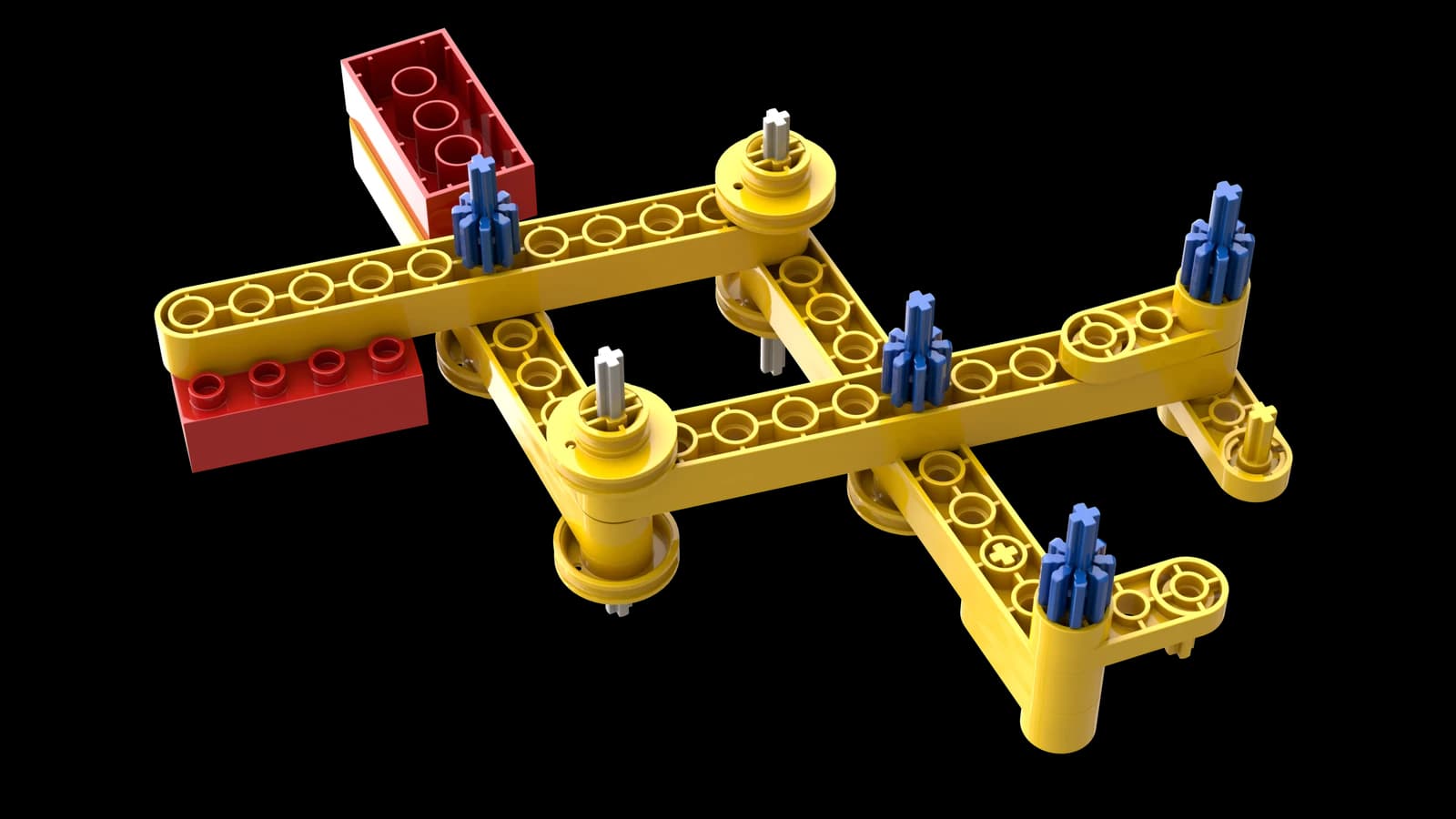
Connect pivots to make a tool that reaches farther.
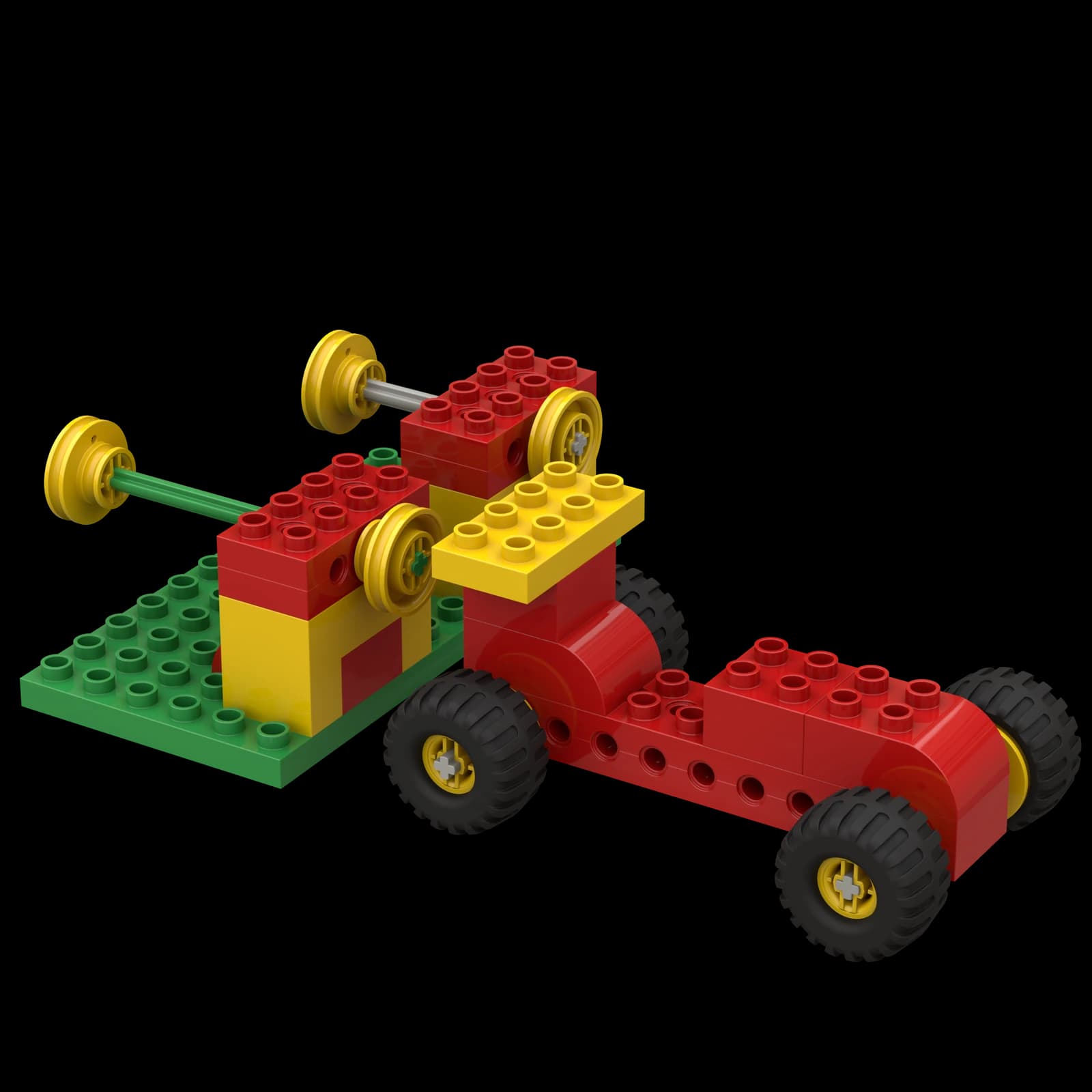
Build a rolling car and investigate how a push changes its journey.
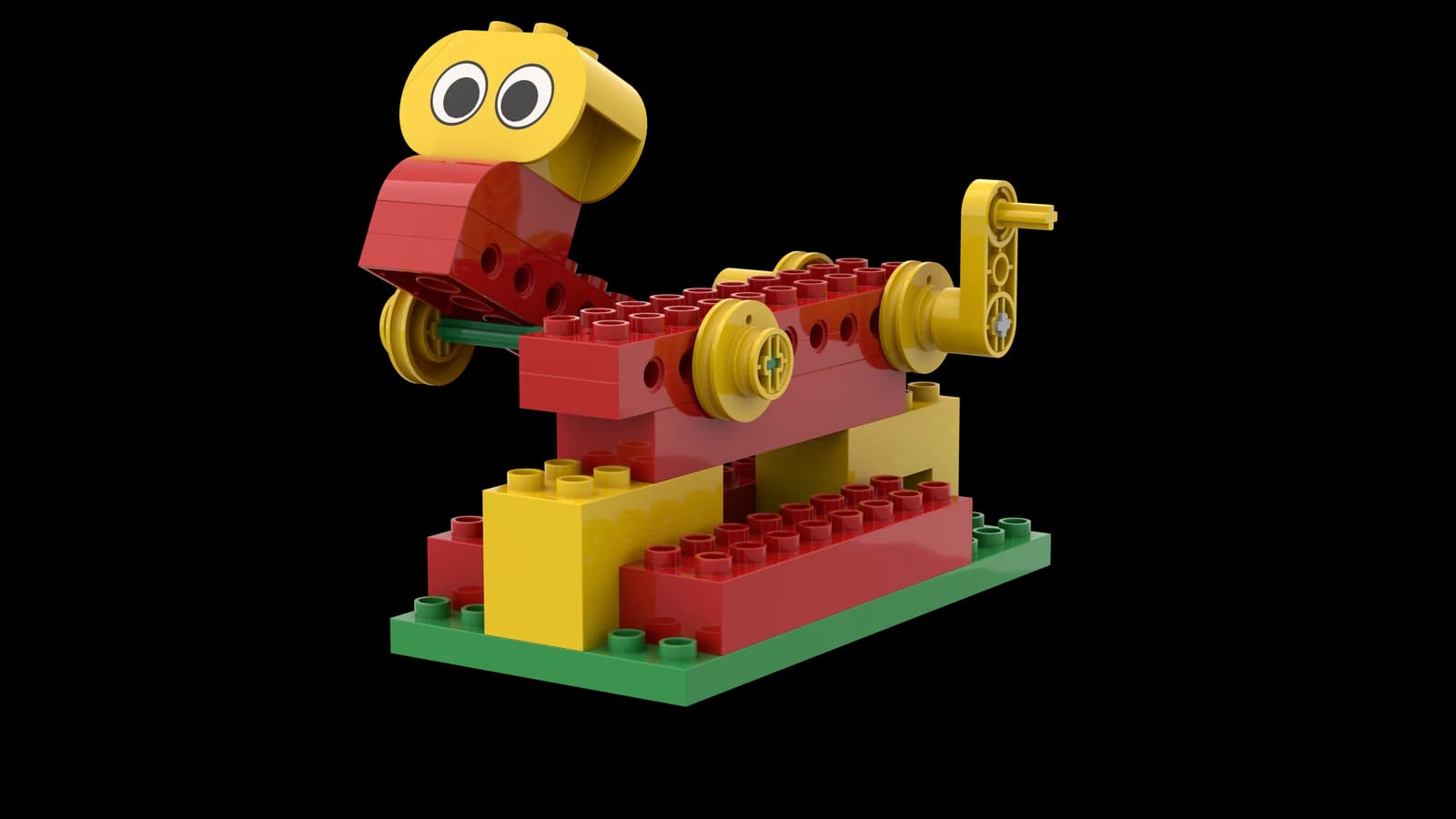
Turn a handle to move a ride and describe its swinging action.
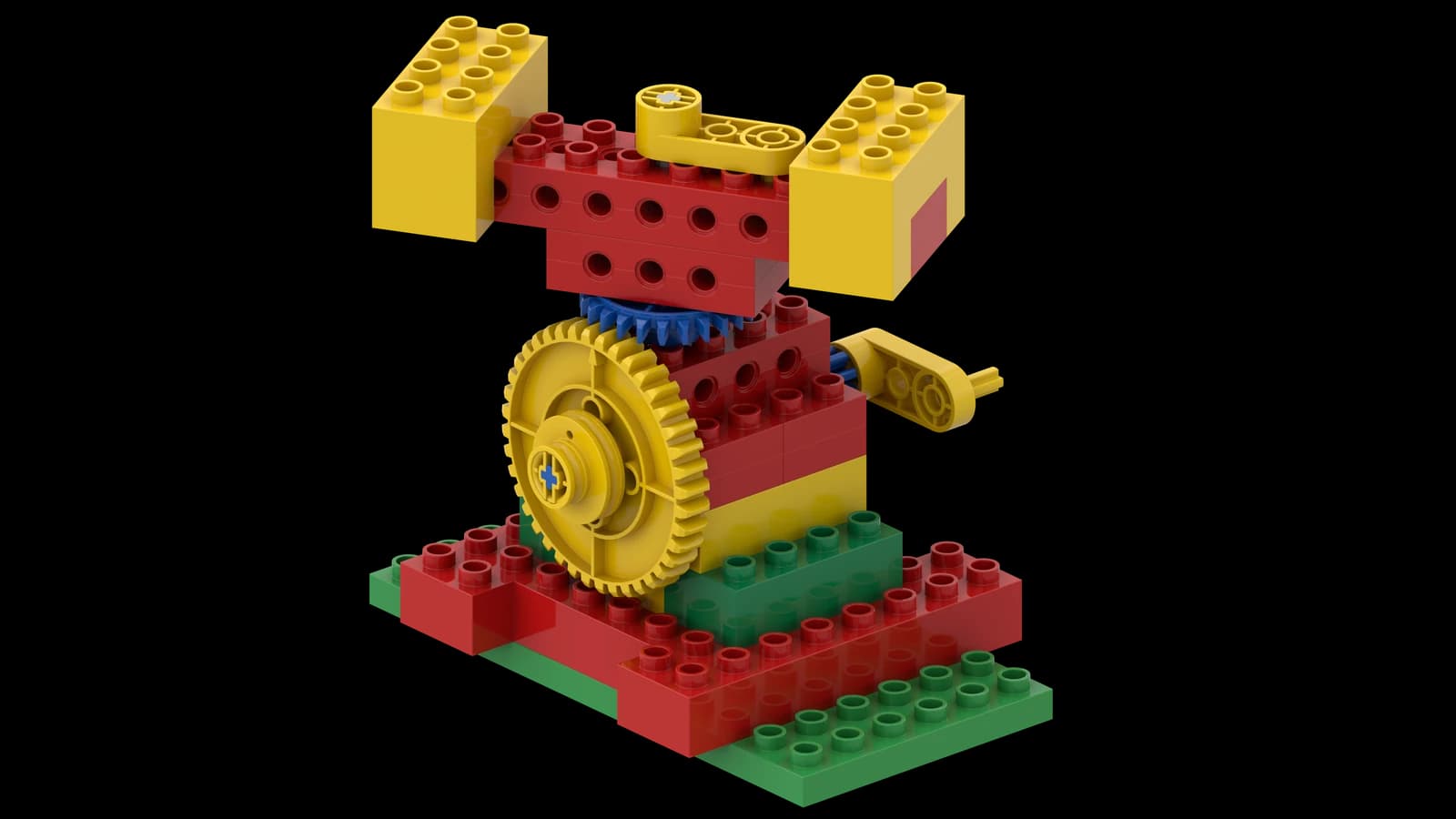
Use a crank, gears and an axle to make the seats spin.
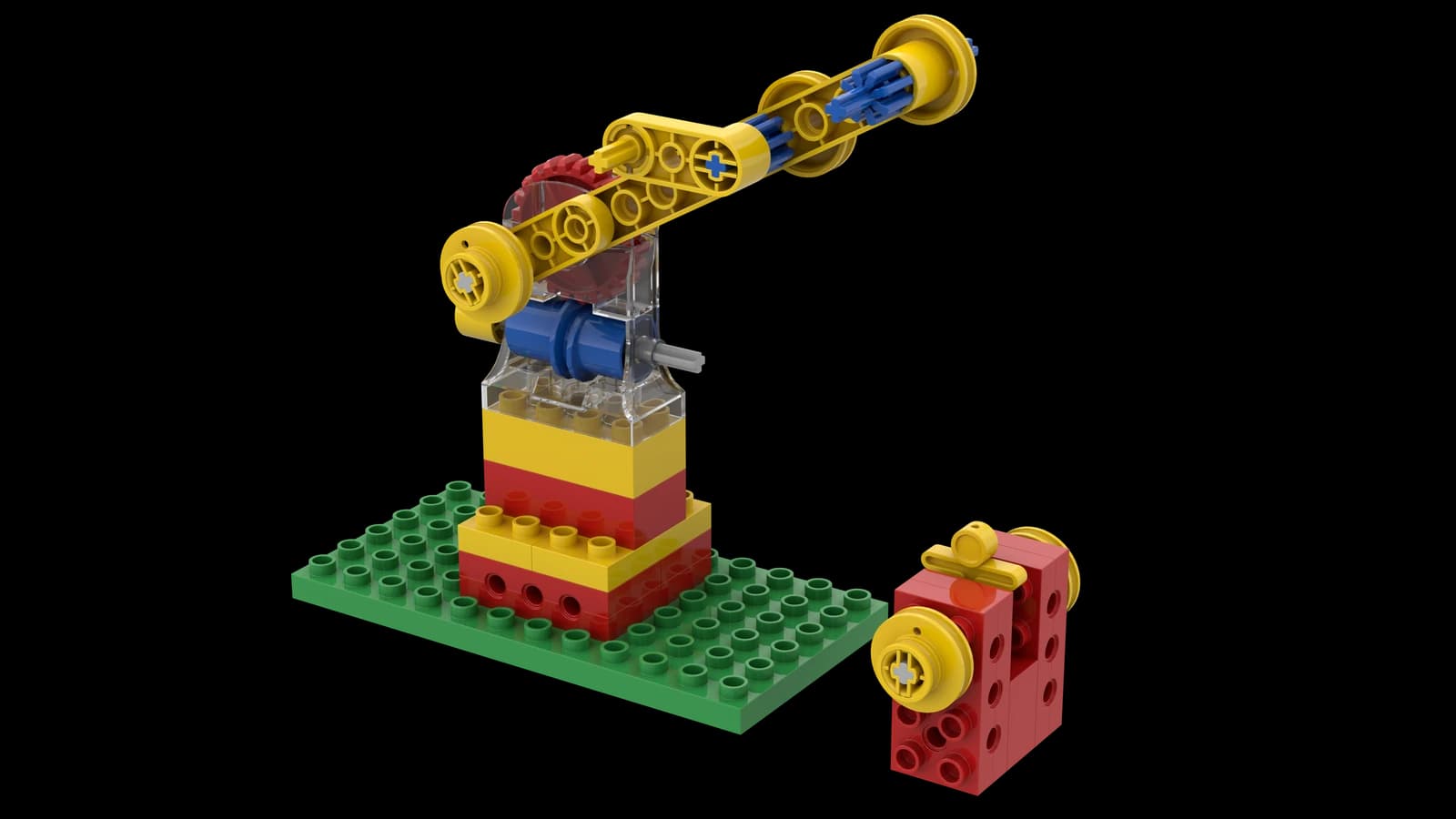
Build a stable lifting machine with an arm and hook.
Observe wheels, distance, and repeatable movement.
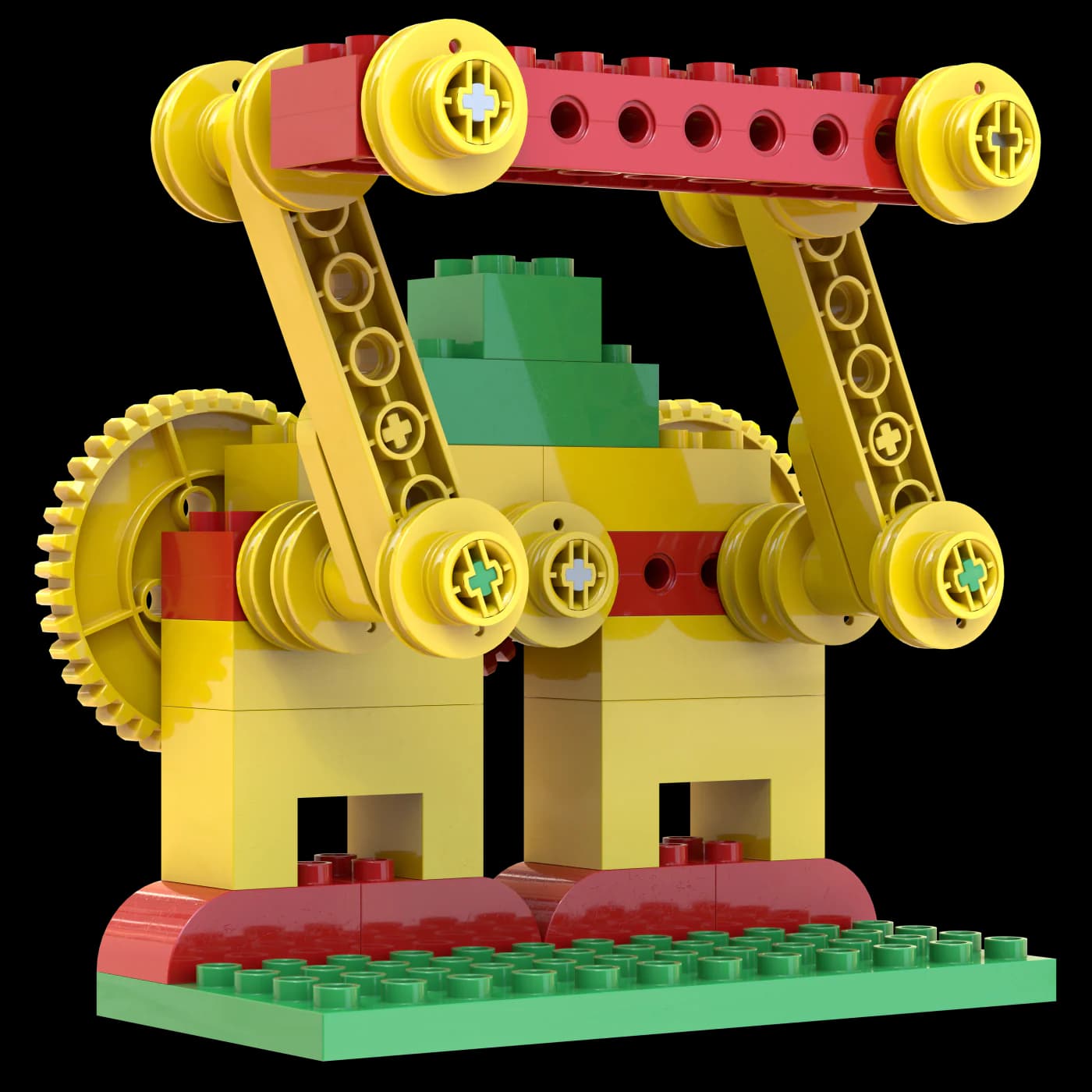
Investigate a model that moves back and forth.
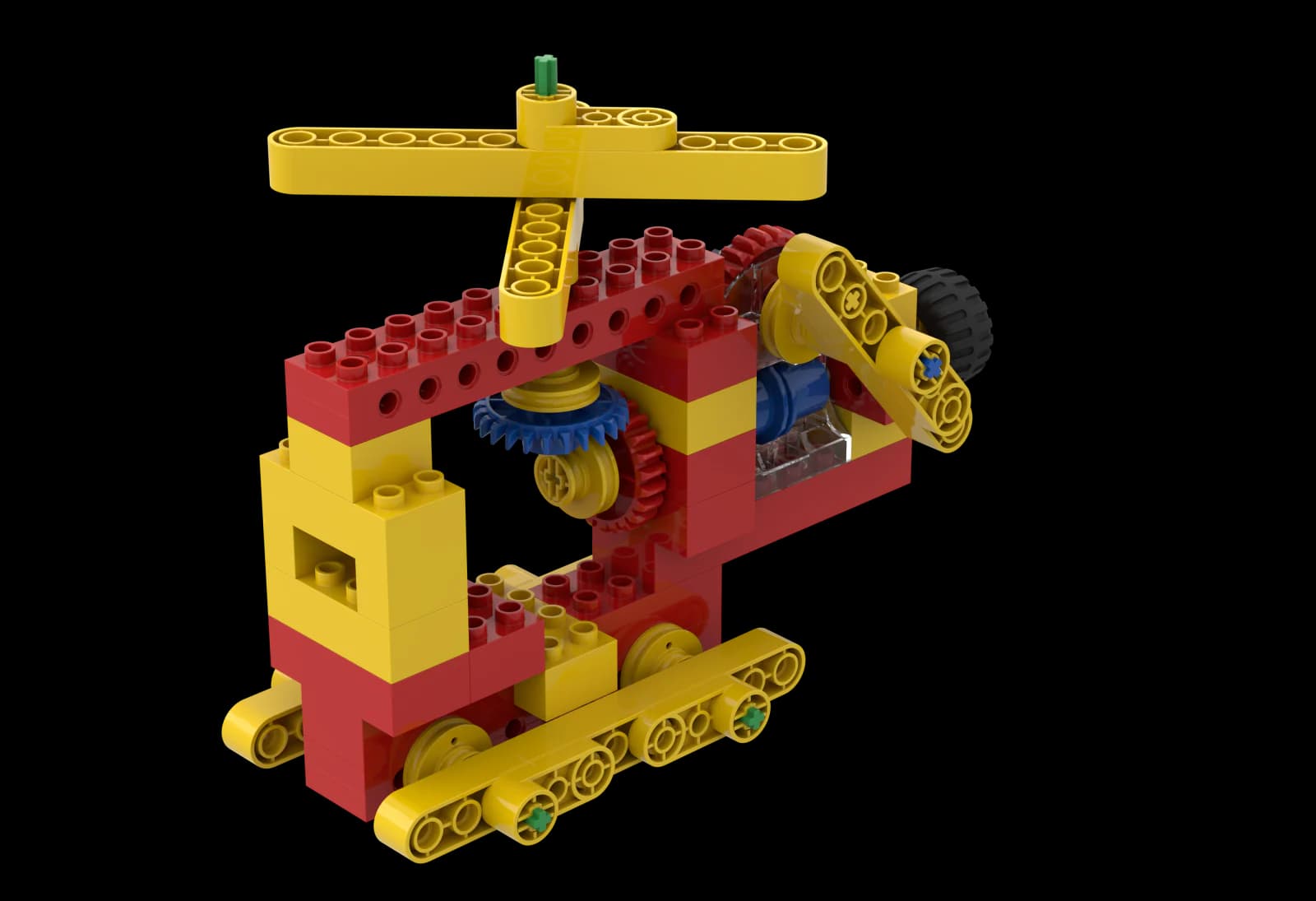
Build a spinning mechanism and explore rotation.
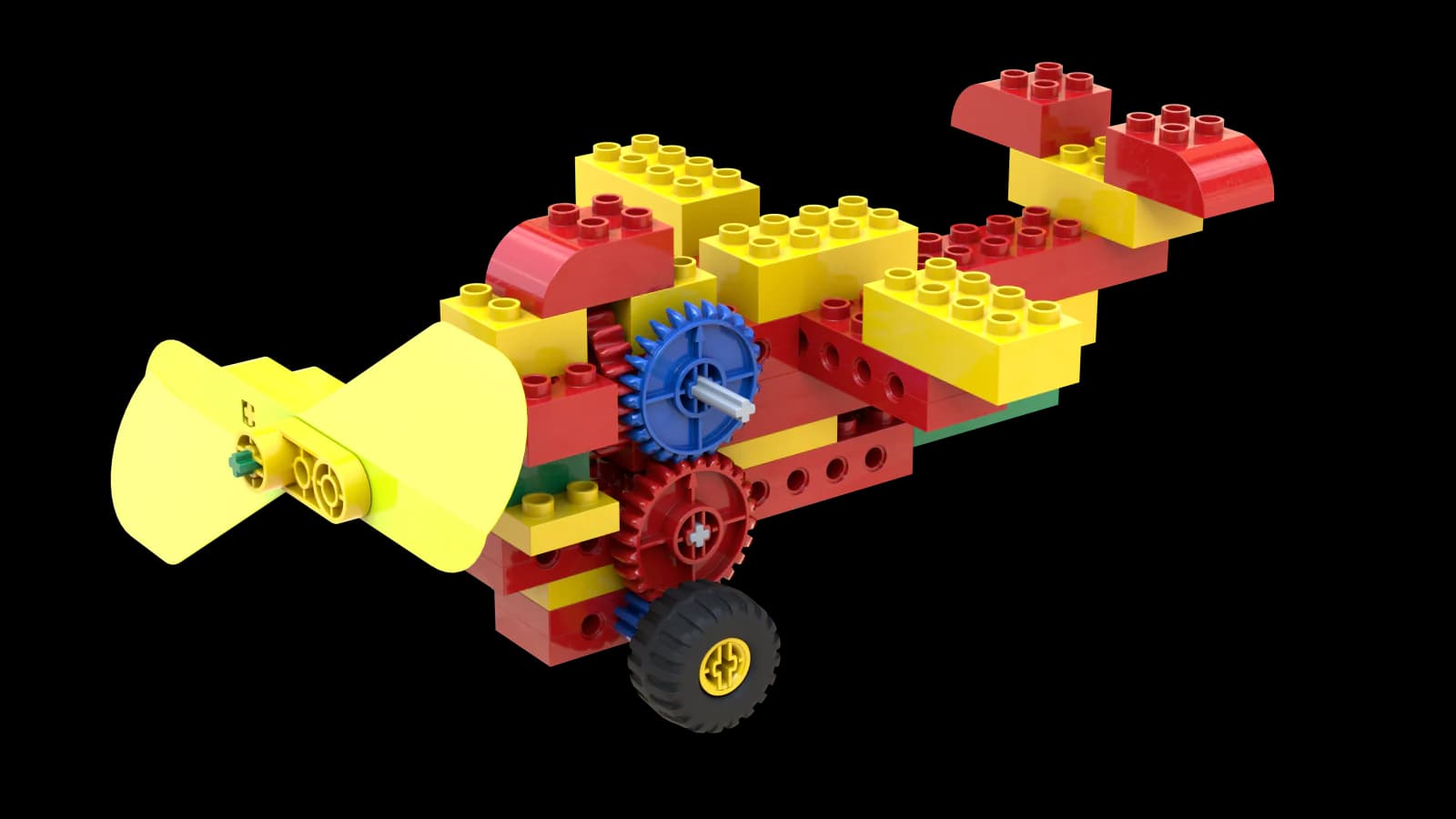
Test and describe a moving model.
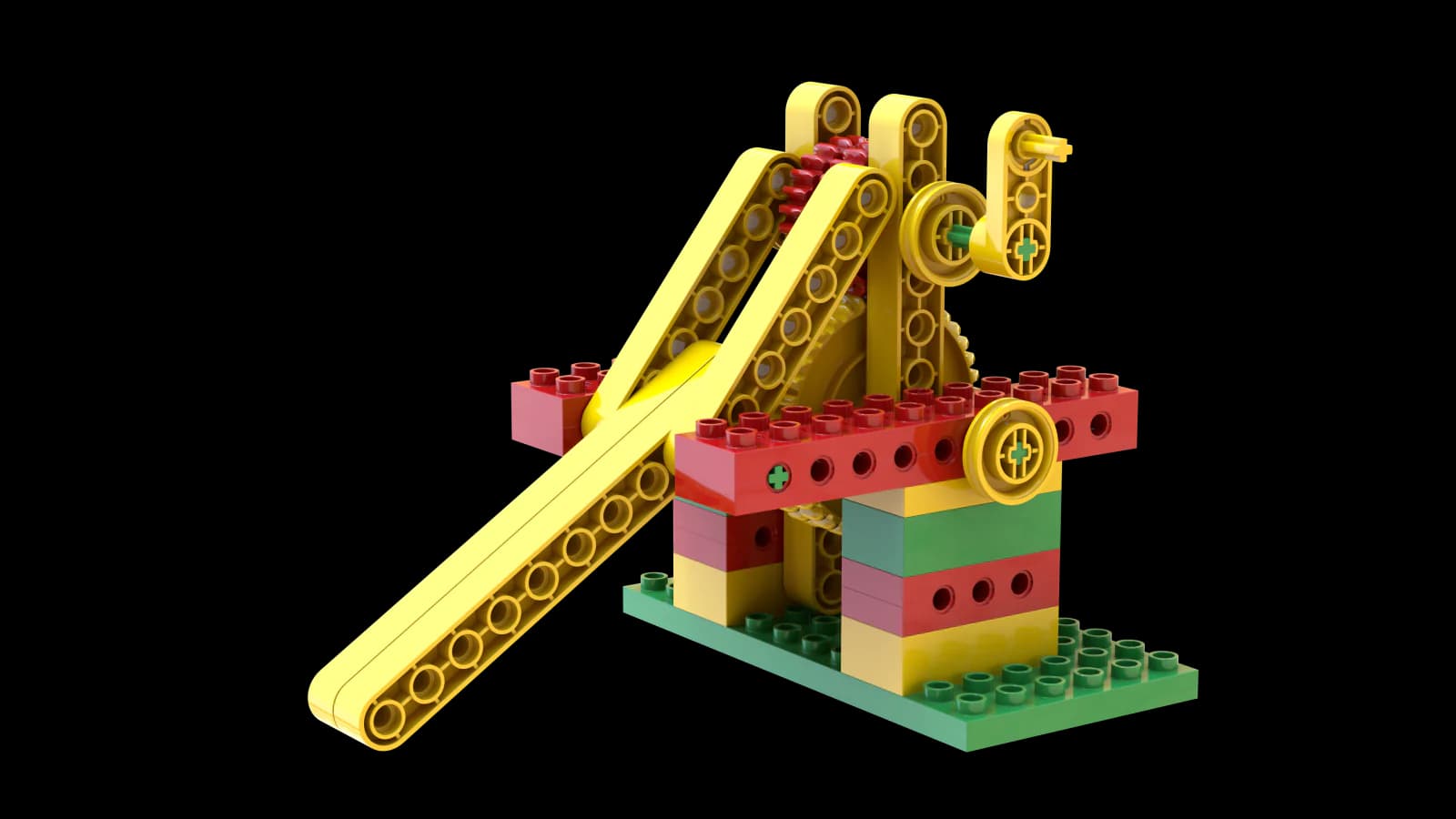
Turn hand movement into a simple mechanical action.
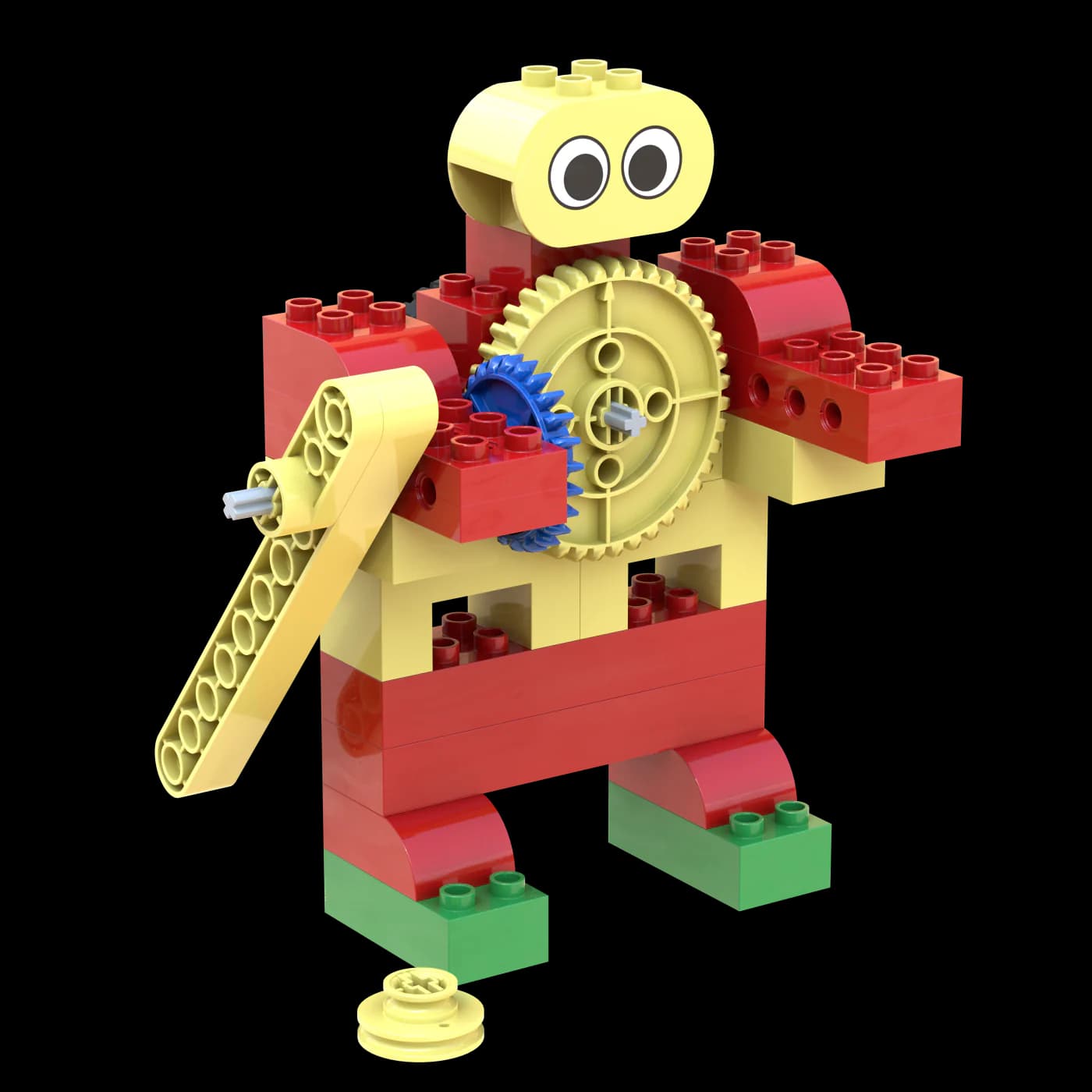
Use a model to test force and movement.
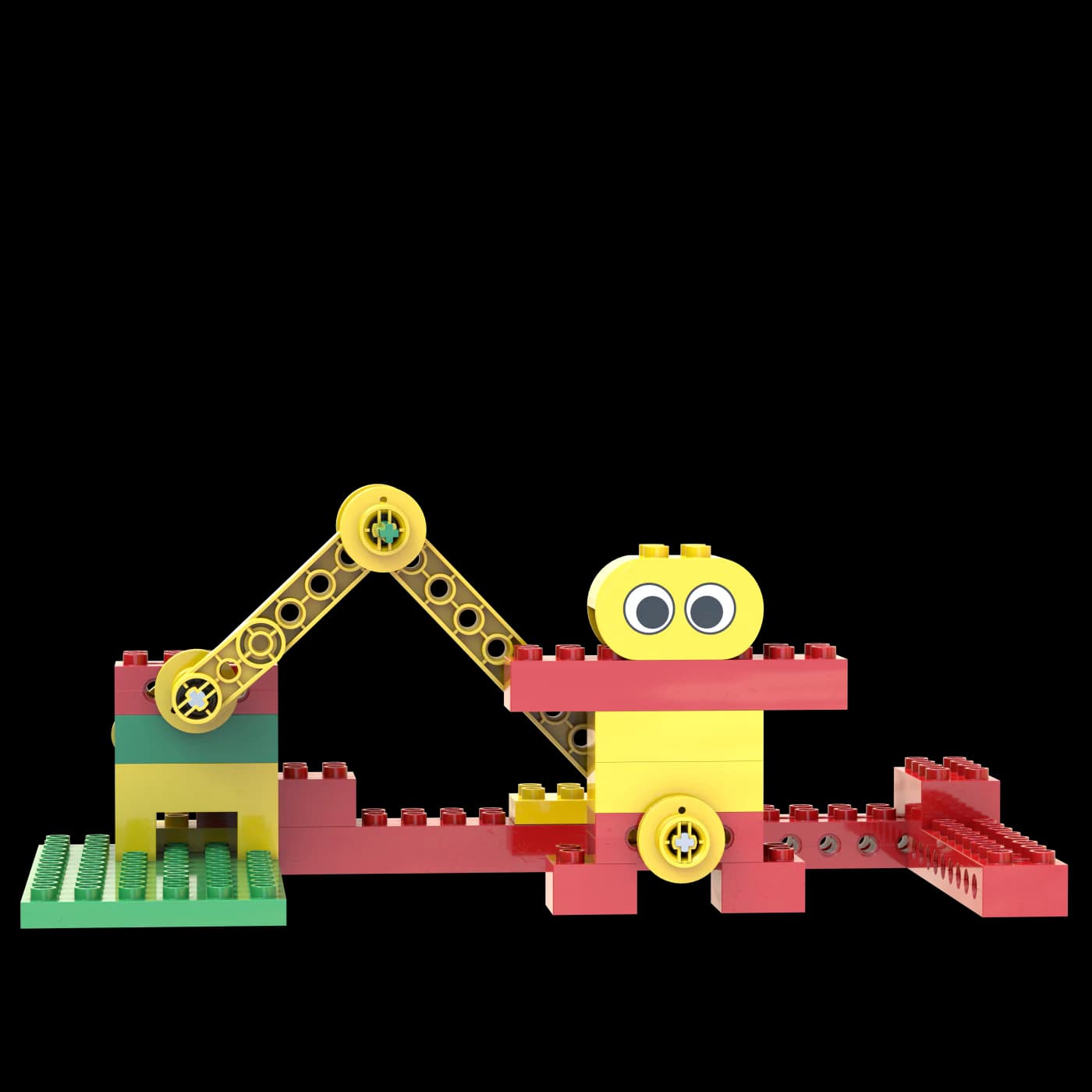
Design and refine a moving defence mechanism.
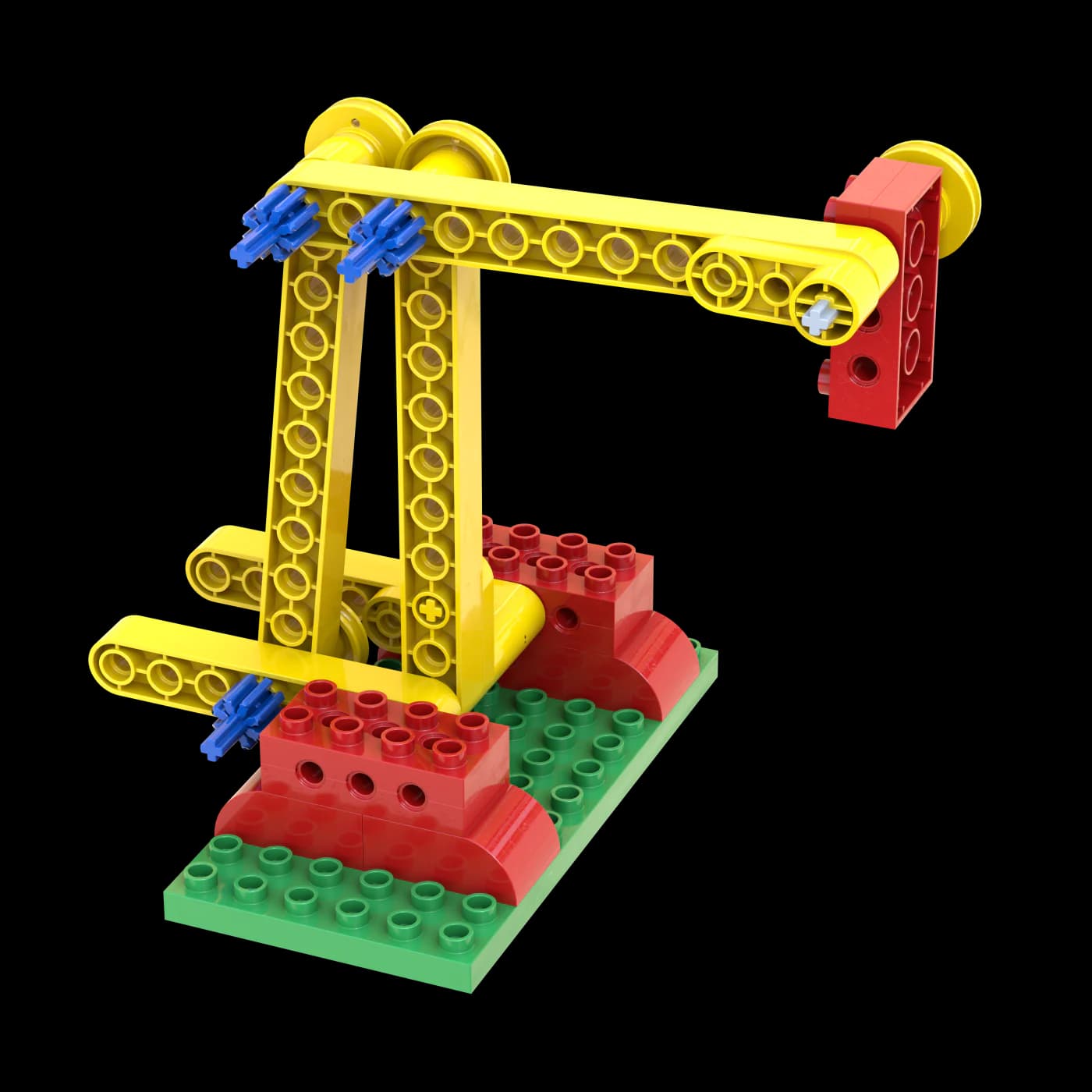
Explore lifting and movement with linked parts.
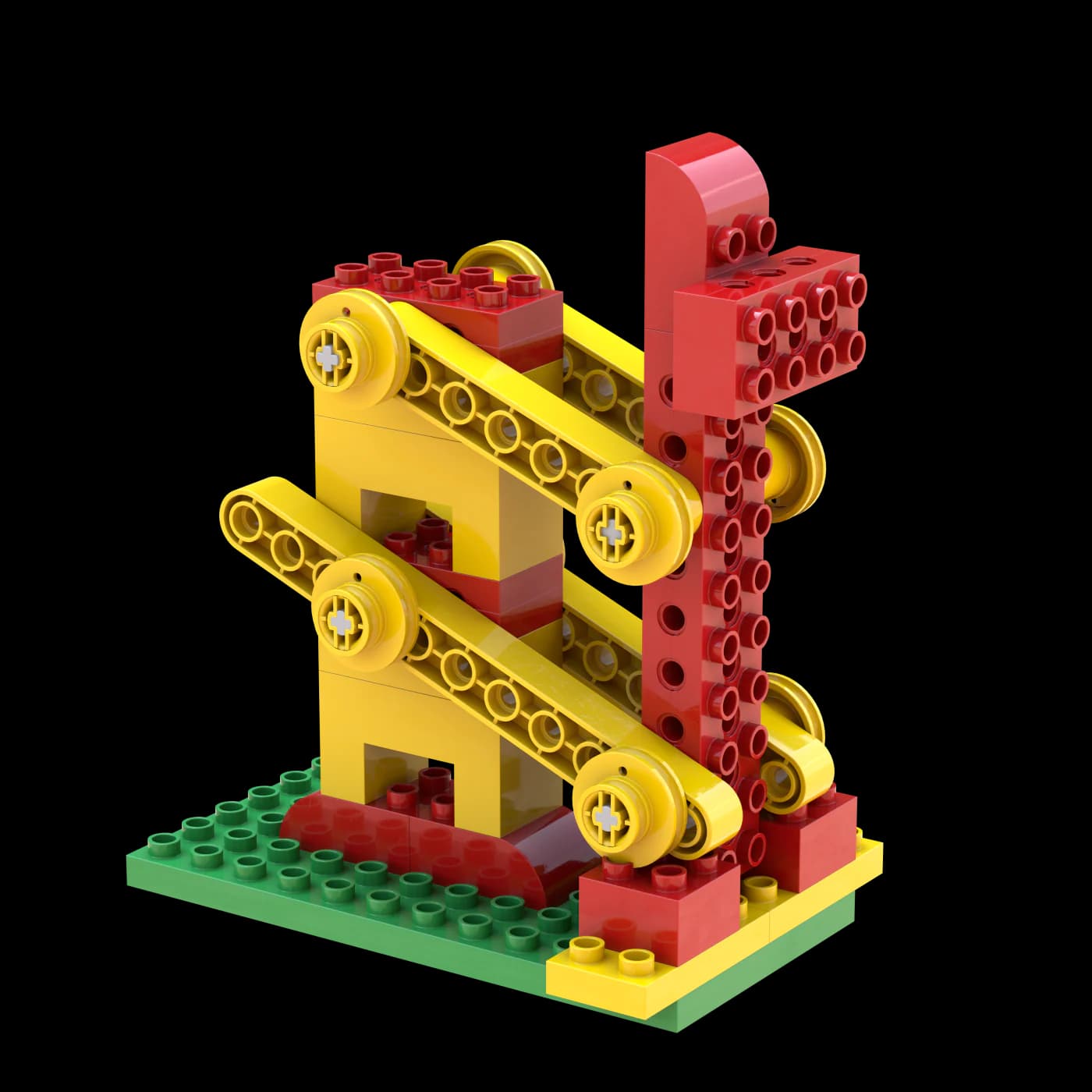
Build a themed model and explain how it moves.
Create and improve a model with expressive movement.
Inside one machine
Children can trace one action all the way through the model: a hand turns, gears meet at new angles, and two rotors respond. That visible chain gives prediction, testing and engineering language something concrete to attach to.
“If I turn this, what will move next?”
Watch rotary movement at the top.
See a turn change direction.
Follow slow, controlled movement.
Notice two outputs respond together.
Built in a real ESM classroom
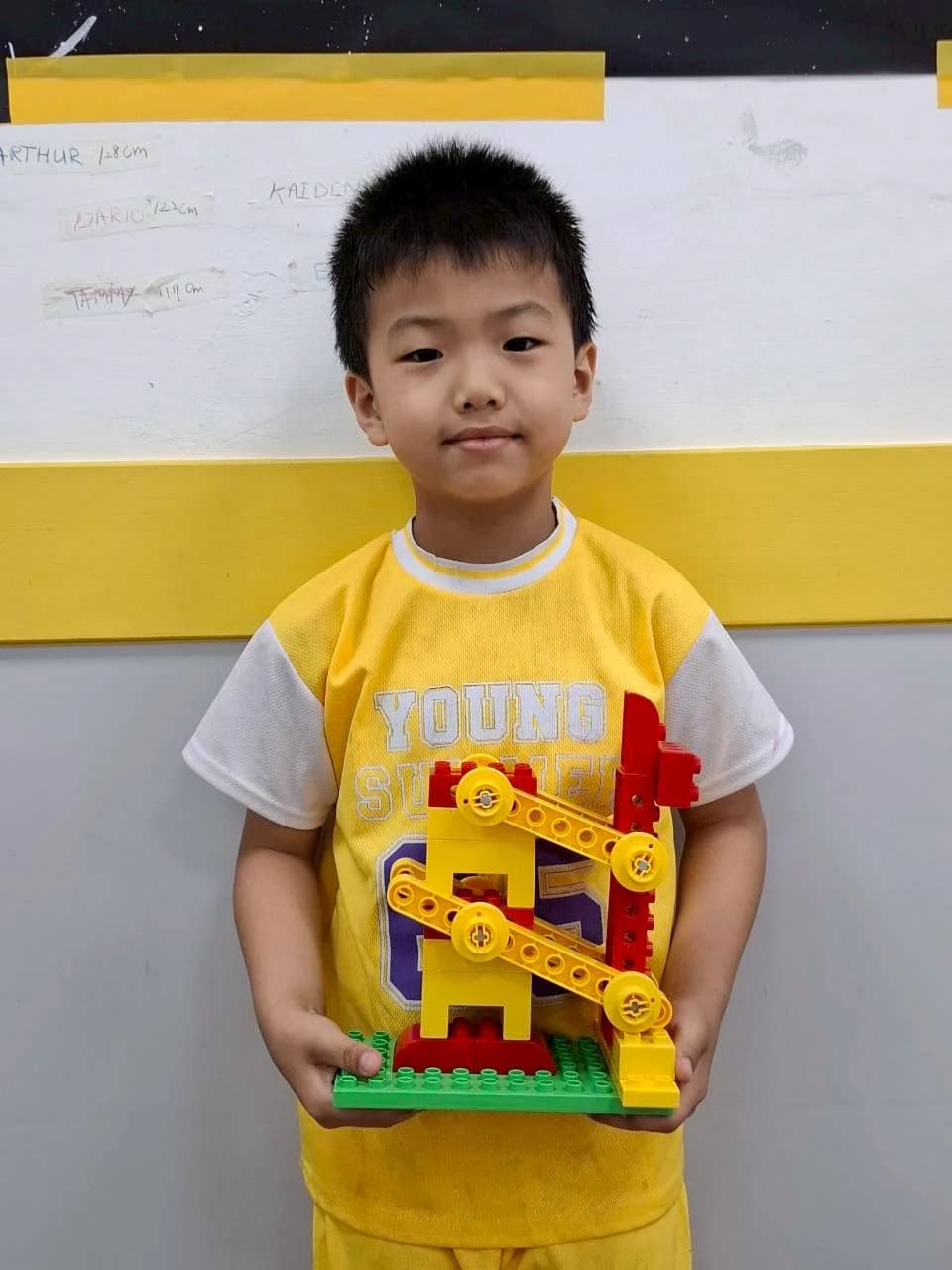
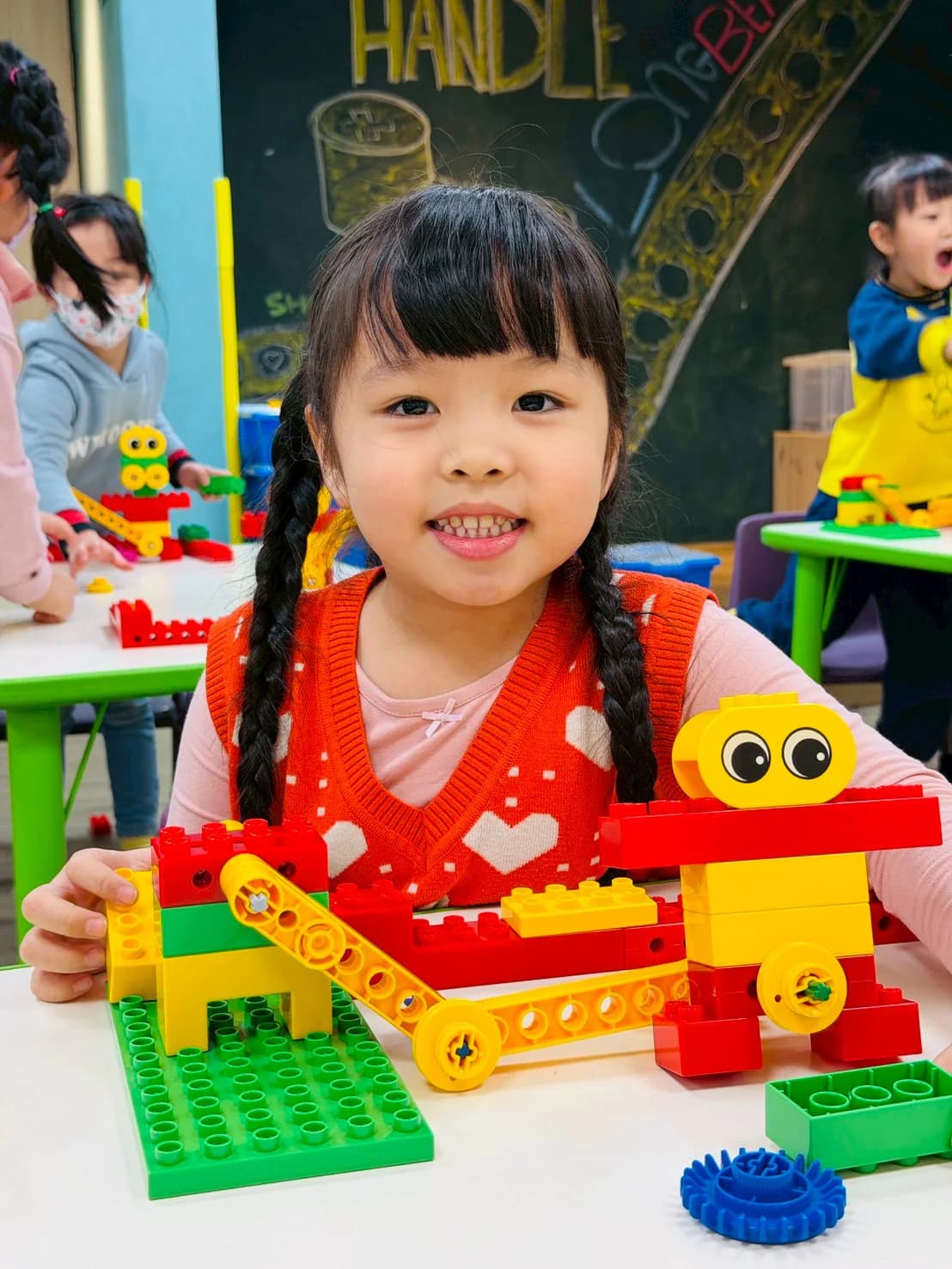
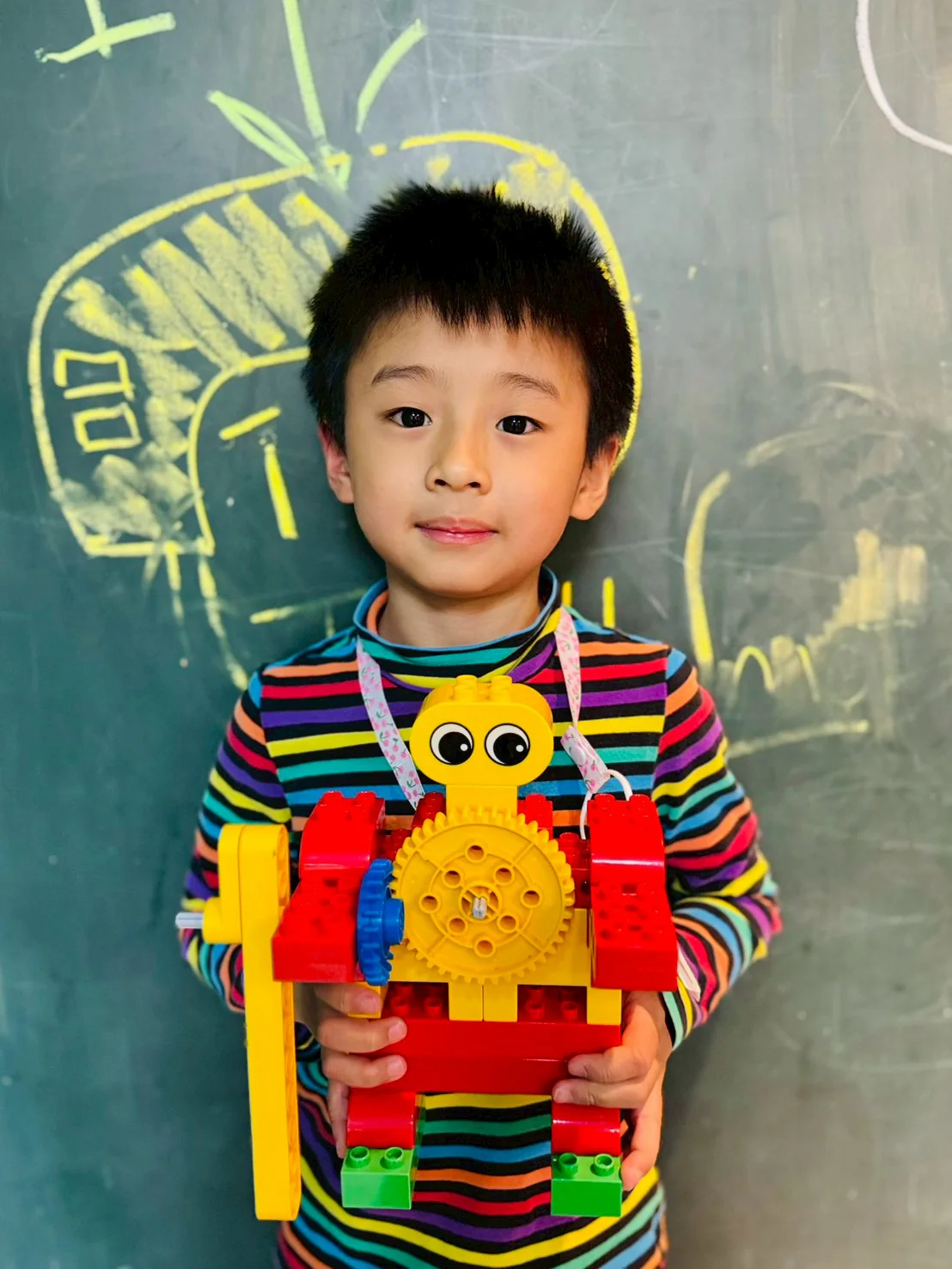
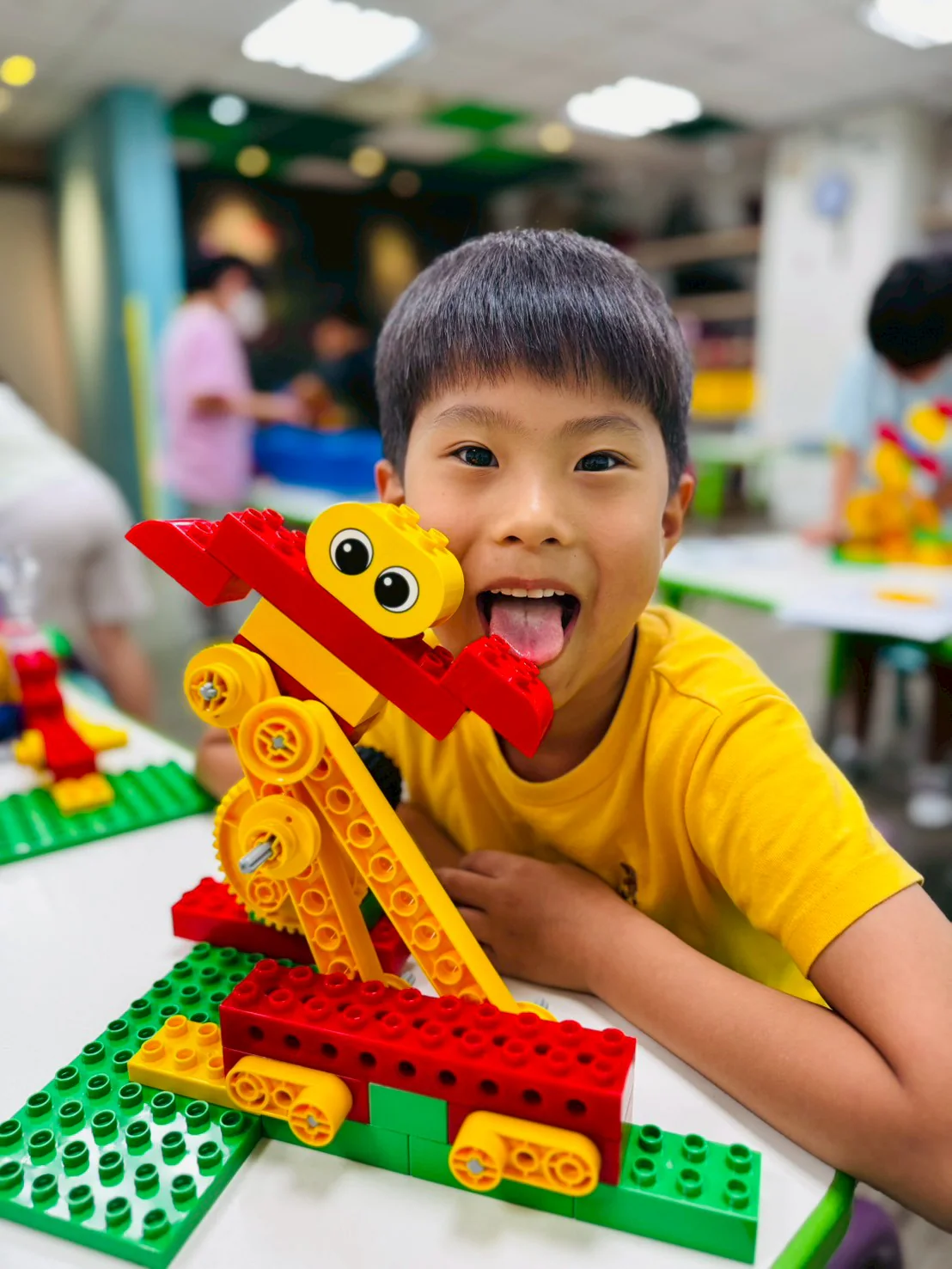
These are current ESM students with the machines they built and tested in 2026. The final photo matters—but so do the decisions, corrections and explanations that came before it.

What grows between the bricks
ESM is designed as a developmental bridge: concrete enough for kindergarten hands, structured enough to prepare children for the deeper testing and measurement of Build Club.
Notice direction, speed, repetition and connections instead of only saying “it moves.”
Use words such as turn, connect, predict, compare and change while they are genuinely needed.
Read a build as a series of steps, keep their place and recover when something differs.
Share parts, listen to an idea and solve a construction problem together.
Try the model, notice what happened and make a correction without treating it as failure.
Move from following a model to applying its movement in a child-owned invention.
Is ESM the right next step?
This course suits kindergarten children who enjoy LEGO, moving toys and figuring things out, and who are ready for a clear classroom rhythm with plenty of hands-on time.
Meet your ESM teachers
Jackson and Rianne make early engineering energetic, welcoming and rich with useful English.

ESM teacher

ESM teacher
The workshop door is open
A friendly trial class gives your child time to meet the materials, experience the ESM rhythm and make something move with purpose.
The complete SQ Exclusive course: ESM 1–4, 20 units and 40 lessons in one year.
Book a trial class